| 1 |
Define the container’s purpose |
Decide whether the unit will be used for cargo transport, general storage, a workshop, a site office, or a conversion project. |
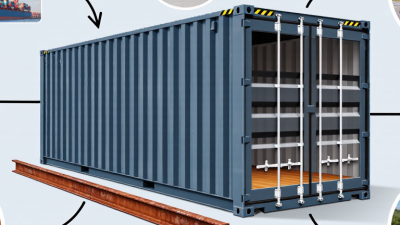
A standard dry container is designed for enclosed cargo storage and transport. It is not automatically suitable for habitation, hazardous materials, or temperature-sensitive goods. |
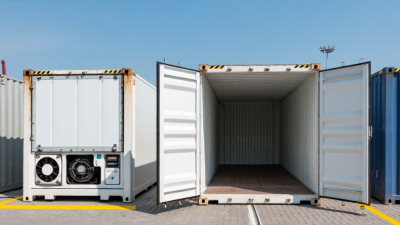
Choose a standard dry unit for ordinary goods; specify modified, insulated, ventilated, or refrigerated equipment only when the use requires it. |
| 2 |
Confirm the external footprint |
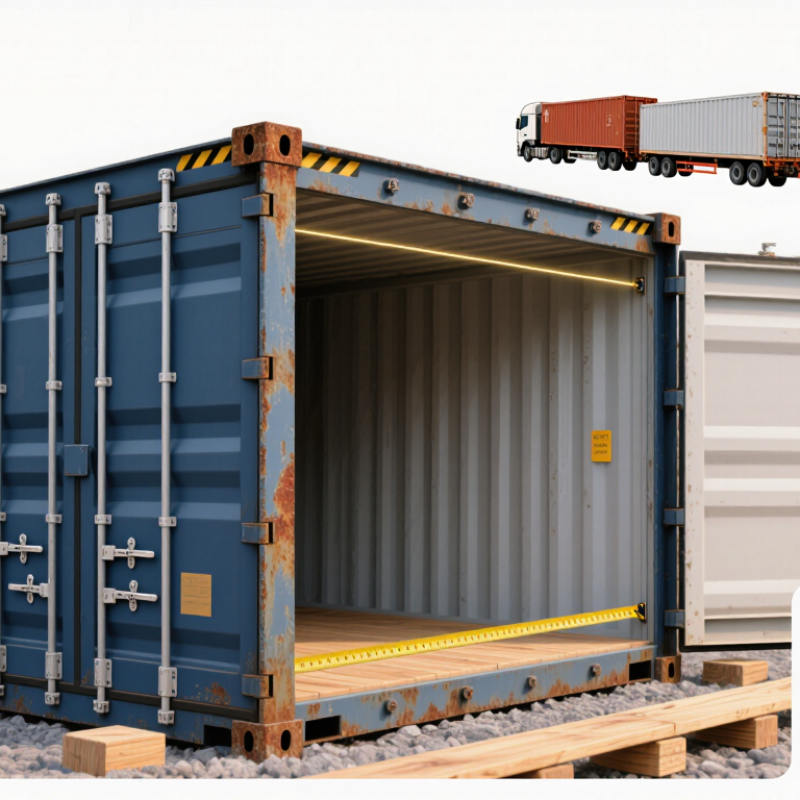
Measure the delivery area, access road, gate, overhead clearance, and placement surface before ordering. |
Nominal external dimensions of a 20-foot ISO container are approximately 6.058 m long × 2.438 m wide × 2.591 m high. |
Allow additional clearance for the delivery vehicle, unloading method, doors, ventilation, and future maintenance access. |
| 3 |
Check usable internal space |
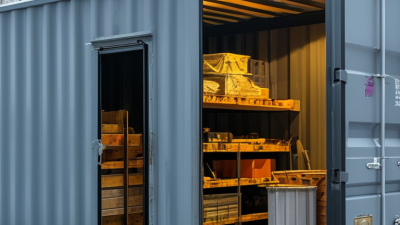
Plan around internal length, width, height, door clearance, shelving, insulation, and any interior lining. |
Typical internal dimensions are about 5.90 m long × 2.35 m wide × 2.39 m high, with an internal volume near 33 m³. Actual dimensions vary by construction. |
Use the supplier’s exact specification sheet rather than relying only on the nominal “20ft” designation. |
| 4 |
Match payload to the cargo |
Compare cargo weight with the container’s maximum gross mass, tare weight, and local road limits. |
Many standard 20-foot units have a maximum gross mass around 30,480 kg. Payload is commonly about 28,000 kg, but it depends on tare weight and the individual unit. |
Select a unit using its door plate and certification documents, and comply with transport regulations in the destination area. |
| 5 |
Inspect doors and openings |
Check door seals, locking bars, hinges, threshold, frame alignment, and the clear opening for loading equipment. |
A typical end-door clear opening is approximately 2.34 m wide × 2.28 m high, though dimensions vary by model and door design. |
Reject units with severe corrosion, bent door frames, damaged locking gear, or seals that allow visible daylight or water entry. |
| 6 |
Evaluate floor condition and loading |
Inspect the floor for rot, delamination, contamination, loose boards, and damage from forklifts or heavy point loads. |
Many dry containers use hardwood or bamboo flooring installed over steel cross-members. Floor capacity and condition differ among units. |
Confirm that the floor is suitable for the intended load, especially machinery, pallet racking, wheels, and concentrated loads. |
| 7 |
Assess weatherproofing and corrosion |
Look for roof pinholes, rust-through, repaired panels, water stains, warped rails, and corrosion around the bottom frame. |
Surface rust can be treatable, but perforation and structural corrosion may compromise weather resistance and strength. |
Request a recent interior water-tightness inspection and photographs of the roof, corner posts, underside, doors, and floor. |
| 8 |
Select required features |
Identify needs such as ventilation, side access, insulation, electrical wiring, shelving, ramps, or lock protection. |
Standard dry units usually have end doors and passive ventilation. Insulation, extra doors, windows, and electrical systems are modifications. |
Specify modifications before purchase and confirm how they affect internal space, structural integrity, certification, and delivery cost. |
| 9 |
Verify documentation and compliance |
Check the identification plate, manufacturing details, maximum gross mass, inspection status, and any required transport certification. |
A container intended for international sea transport generally requires valid safety approval under the applicable container safety regulations. |
For stationary storage, local planning, fire, electrical, and building requirements may also apply; verify them before installation. |
| 10 |
Calculate total delivered cost |
Include the container price, inspection, transport, crane or unloading equipment, site preparation, taxes, modifications, and ongoing maintenance. |
Delivery cost is strongly affected by distance, access conditions, lifting method, site restrictions, and whether the unit is new or used. |
Compare written, itemized quotations and confirm the delivery method, placement responsibility, warranty terms, and acceptance procedure. |