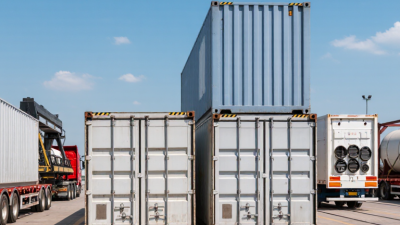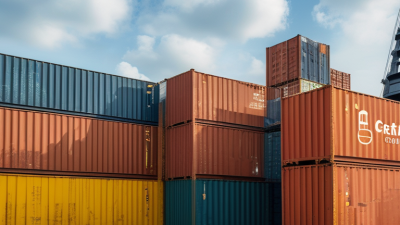
A conex shipping container is a rugged steel box designed to move cargo safely between trucks, trains, ships, and storage yards. The name comes from “Container Express,” a military logistics system developed in the 1950s. Today, people often use “CONEX” for intermodal containers, although the term is not always technically precise. Many units resemble standard ISO containers, but their age, dimensions, doors, and structural condition can vary.
Malcolm McLean, a pioneer of modern container transport, famously said, “You can move a box without moving the contents.” That simple idea changed global freight handling. Instead of unloading individual items at every transfer point, workers can move one sealed steel unit with cranes, chassis, or forklifts. A typical 20-foot conex shipping container may have corrugated sidewalls, locking bars, wooden flooring, and corner castings built for lifting. Small details matter. A bent door can admit rain. A damaged floor can weaken the entire loading process.
This guide will explain what a conex shipping container is, how it differs from an ISO container, and where each type works best. It will also examine common sizes, materials, security features, ventilation, and condition grades. Buyers should inspect welds, roof panels, door gaskets, and floor damage before making a decision. Specifications can be confusing. Sometimes, a cheaper container becomes expensive after repairs. That uncomfortable possibility deserves attention. The safest choice depends on cargo weight, transport requirements, storage time, and verified supplier documentation.
A CONEX shipping container is a steel transport box linked to the term “Container Express.” The system emerged from U.S. military logistics during the 1950s. It helped move supplies between ports, rail yards, trucks, and forward storage areas. Early units were smaller than many modern containers. They used reinforced corners, double doors, and lifting points for repeated handling.
The history is less tidy than the acronym suggests. CONEX containers influenced later intermodal equipment, but they were not identical to every ISO container. Modern dimensions follow standards such as ISO 668, which define common 20-foot and 40-foot container sizes. A typical 20-foot unit measures about 6.06 meters long. Its ribbed steel walls resemble a warehouse wall folded into a box.
This design still matters because global freight depends on predictable handling. UNCTAD’s Review of Maritime Transport 2023 reports that shipping carries over 80% of world merchandise trade by volume. The World Bank’s 2023 Logistics Performance Index also collected evidence from logistics professionals across 139 economies. Their findings highlight the value of reliable tracking, smooth transfers, and dependable infrastructure. A CONEX-style container supports those practical needs. Yet the label is sometimes used too loosely. Not every weathered steel box is a true historical CONEX unit. Checking its dimensions, fittings, condition, and documentation remains essential. That small inspection can prevent a costly assumption.
The CONEX container system emerged from military logistics after the Second World War. Earlier cargo handling often relied on loose boxes, sacks, and wooden pallets. These methods required repeated loading and exposed supplies to weather. The United States Army developed a stronger, reusable steel container during the early 1950s. Its name came from “Container Express.”
The system gained practical value during the Korean War. Standard-sized boxes moved equipment, food, clothing, and medical supplies between transport hubs. Workers could transfer them by truck, rail, or ship with fewer handling steps. Early units commonly measured about eight feet wide and eight feet high. Many were approximately ten feet long. Later versions reached twenty feet, allowing more cargo per movement.
This development changed military transport planning. Containers reduced damage, improved loading speed, and offered basic protection from rain and dust. Yet the system was not perfect. Different sizes and fittings sometimes limited interchangeability. Historical records also describe early dimensions differently, depending on the period and source. That inconsistency matters when comparing older CONEX units with modern freight containers.
During the 1960s, international freight systems moved toward more unified dimensions and corner fittings. The CONEX concept helped demonstrate the value of standardized cargo handling. Its influence can still be seen in today’s intermodal container network, even though modern containers follow broader international specifications.
A CONEX shipping container is a reusable steel box built for intermodal freight movement. The term is common, but not perfectly precise. Most units follow standardized dimensions, lifting points, and stacking requirements. Their design allows transfer between ships, railcars, and trucks without unloading the cargo.
The most common sizes are 20 feet and 40 feet long. Both are usually about 8 feet wide. Standard height is 8 feet 6 inches, while high-cube models reach 9 feet 6 inches.
Internal space is smaller because of wall panels, corner posts, doors, and floor supports. Size charts can mislead. Always measure the actual unit.
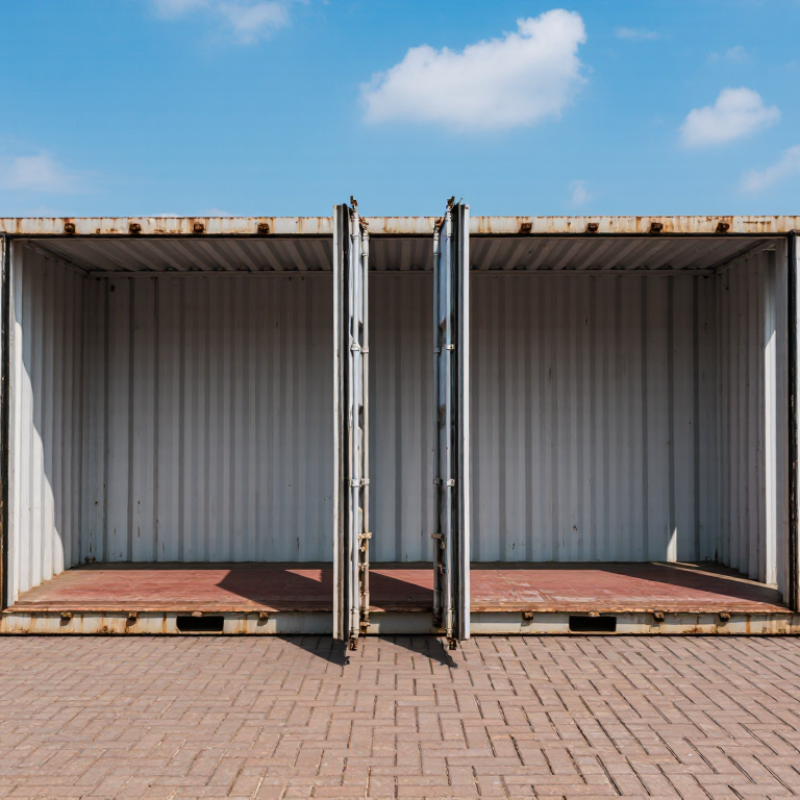
Corrugated steel walls resist dents and improve side-to-side strength. Heavy corner posts carry stacking loads. Reinforced top and bottom rails support lifting forces. Double cargo doors usually include locking bars, rubber seals, and steel hinges. The floor often uses treated hardwood over transverse steel cross members. Look closely at the corners.
A practical inspection should check rust, door alignment, floor softness, and roof damage. A valid safety plate can confirm key ratings and inspection information.
Payload limits depend on the container’s condition and specifications. A strong-looking box may still have hidden corrosion beneath old paint. That detail is easy to miss.
A CONEX shipping container is a reusable steel box built for moving and storing cargo. Its standard dimensions support lifting, stacking, and transport between locations. Today, people commonly use CONEX containers for equipment storage, farm supplies, temporary workshops, and compact site offices. A 20-foot unit suits limited spaces, while a 40-foot unit offers more floor area.
Available modifications can make the interior far more practical. Common options include personnel doors, windows, ventilation fans, insulation, lighting, electrical outlets, shelving, and ramps. A modified container may become a workshop with bright task lighting and wall-mounted tools. However, cutting steel can reduce structural strength if the work is poorly planned. Condensation is another concern, especially when warm air meets cold metal. Field inspections often find moisture hidden behind insulation. That detail is easy to miss. Choose modifications according to local building requirements, intended use, and expected climate. A qualified fabricator should review major openings and electrical systems.
Tips: Measure the delivery route first. Check door clearance and ground stability. Inspect the floor, roof, seals, and locking bars before purchase. Ask for drawings of every modification. Leave ventilation space around stored equipment. Small oversights can become expensive repairs.
A CONEX shipping container is a standardized steel box designed for repeated handling. It moves between trucks, railcars, and vessels without unloading the cargo. During loading, keep the weight low and distribute it evenly. Heavy items should stay near the container’s center. Uneven cargo can shift during braking or sharp turns. That risk is easy to underestimate.
Handling requires suitable lifting equipment and trained personnel. Operators should check corner castings, doors, floors, and locking bars before movement. Cranes use approved lifting points, while forklifts require enough capacity and correct fork placement. Never rely on a damaged frame. A small dent may hide structural weakness. I have seen inspection routines become rushed when schedules tighten. That is where preventable errors begin.
Transport planning also includes verified dimensions, gross weight, axle limits, and route restrictions. The container should display a valid safety approval plate and match the carrier’s acceptance requirements. Shipping documents must describe the cargo accurately, including quantity and weight. Customs rules, terminal procedures, and local transport laws may differ by route. Seals should be recorded before departure and checked upon arrival. A checklist helps, but it is not flawless. Weather, poor access roads, or unclear instructions can still disrupt handling. Careful communication between the shipper, driver, terminal, and receiver remains essential.