7 Tips for Buying an 8ft Shipping Container
An 8ft shipping container can solve a very specific problem: storing tools beside a workshop, protecting seasonal equipment, or fitting secure storage into a narrow yard. Its compact footprint is useful, but “small” does not mean simple. Door clearance, internal dimensions, floor condition, delivery access, and ventilation can determine whether the unit works in practice. Measure the route, not just the space where it will sit.
Industry data offers context, not a promise of demand for this exact size. UNCTAD’s Review of Maritime Transport 2024 reports that global container port throughput reached about 858 million TEU in 2023, up 2.3% from 2022. TEU measures standard container capacity; it does not track 8ft units separately. Still, the figure shows the scale of the wider container system from which smaller storage products are sourced. Check the seller’s specifications and inspection details rather than assuming every unit matches standard dimensions.
One practical rule: “Measure the opening, the load, and the delivery route before comparing prices.” This is original editorial guidance, not a quotation from a named expert. No verifiable, published quote from a named 8ft-container specialist was provided, so attributing one would risk misleading readers. That matters. A low price can look appealing until a forklift cannot reach the drop-off point or a damp floor damages stored goods. The seven tips that follow focus on condition, size, access, security, delivery, price, and the questions buyers should ask before committing. Some checks feel overly cautious. They are still worth making.
Determine Whether an 8ft Shipping Container Fits Your Needs
An 8ft shipping container can solve a real space problem, but its small footprint is not automatically a good fit. Start with the items you plan to store, then measure their width, height, and length, including handles or packaging. Compare those measurements with the container’s usable interior dimensions, not just its advertised exterior size. Wall thickness, floor height, and door clearance reduce workable space. Measure twice. If you need to store bulky equipment, sketch how it will enter and turn inside. A tight doorway can make an otherwise suitable container frustrating to use.
Think about the site as carefully as the contents. Check the delivery route for overhead branches, gates, slopes, and enough room for the truck to position the container. Access matters. Ask the supplier for exact exterior and interior dimensions, door-opening measurements, floor condition, and payload limits; specifications can vary by model and condition. For frequent access, leave a clear aisle rather than filling every inch. An 8ft unit may be enough for tools, seasonal supplies, or a compact work area, but it can feel cramped quickly. I would allow more room than the first sketch suggests, though that extra space is not always practical on a tight site.
7 Tips for Buying an 8ft Shipping Container - Determine Whether an 8ft Shipping Container Fits Your Needs
| Tip |
What to Check |
Useful Measurements or Facts |
How to Decide |
| 1. Measure the available site |
Check the installation area, access route, overhead clearance, and space needed to open the doors. |
A commonly listed external footprint for an 8 ft container is about 8 ft × 8 ft (2.44 m × 2.44 m), or roughly 64 sq ft (5.9 m²). Actual dimensions vary by model. |
Compare the supplier’s exact external dimensions with the site and delivery route. Allow extra room for placement and door access. |
| 2. Verify usable interior space |
Ask for the internal length, width, and height rather than relying on the external size. |
Walls, corner posts, and the door frame reduce usable space. Internal dimensions differ between designs and should be confirmed on the specification sheet. |
Measure your largest items and plan how they will fit, including room to move or remove them later. |
| 3. Check the door opening |
Confirm the clear opening width and height, door type, and whether the doors can open fully at your site. |
The door opening is smaller than the container’s external dimensions; its exact size varies by unit. |
Compare the opening with the widest and tallest item you intend to load. Include packaging, handles, or equipment attachments in your measurements. |
| 4. Match capacity to your contents |
Review the unit’s tare weight, maximum gross weight, and payload rating where available. |
Payload is generally calculated as maximum gross weight minus tare weight. Ratings are model-specific and must be checked on the unit’s data plate or documentation. |
Estimate the total weight of the contents and stay within the stated rating. Do not assume all 8 ft containers have the same capacity. |
| 5. Choose the right height |
Check the external and internal height, especially if storing tall equipment or shelving. |
Container heights can vary; standard-height and taller versions are available in some product ranges. A taller unit also needs more overhead clearance. |
Measure the tallest item and the available clearance before selecting a height. Confirm the exact model dimensions with the seller. |
| 6. Inspect condition and protection |
For a used unit, inspect the roof, floor, doors, seals, hinges, locking points, and signs of corrosion or water entry. |
Condition labels and grading practices are not identical across sellers. A visual inspection and written condition details help clarify what is included. |
Request current photographs or an in-person inspection. Confirm that doors operate properly and the floor is suitable for your intended use. |
| 7. Confirm delivery and placement requirements |
Ask how the unit will be transported, unloaded, and positioned, and whether the ground is prepared. |
Delivery vehicle access, turning space, ground firmness, and level support can affect whether placement is possible. |
Share site photos and measurements with the delivery provider. Prepare a firm, level base and confirm any access or placement limits in advance. |
Note: Dimensions and ratings vary by design, manufacturer, and condition. Treat the figures above as planning guidance and verify the exact specifications of the individual container before purchase.
Check Container Dimensions and Prepare the Placement Site
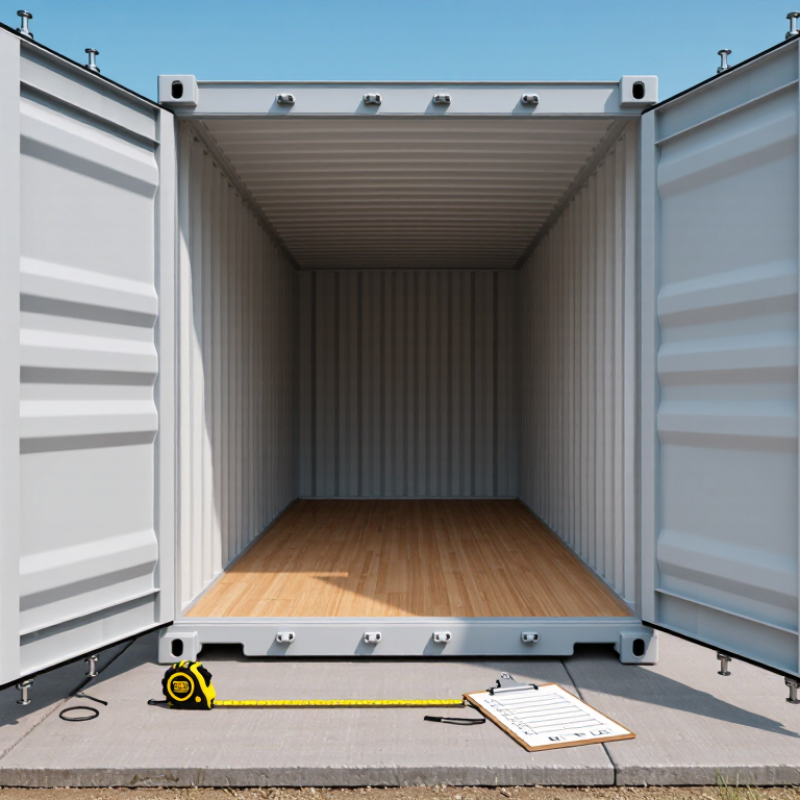
An 8ft container sounds easy to place, but “8ft” usually describes its nominal length, not every outside measurement. Ask for the unit’s specification sheet and confirm its length, width, height, door opening, and corner fittings before preparing the site. Measure it yourself when possible. Dimensions can vary slightly, and door clearance matters if you plan to move bulky items inside. Check the delivery vehicle’s turning space, overhead branches, gates, and approach route. The container may fit the pad but not the path. A tape measure and a simple sketch can prevent an expensive repositioning.
Choose firm, level ground that drains well. Soft soil, standing water, or a slope can make doors bind and place uneven stress on the frame. Use stable supports beneath the intended corner points, following the supplier’s placement guidance. Avoid loose bricks or scattered blocks. Keep support heights consistent, then check the level again after placement. It is tempting to treat a gravel patch as ready, but fresh gravel can shift under load, especially after rain. Compact the base and leave room for runoff. I would not assume a site is ready just because it looks flat; small dips are easy to miss.
Inspect the Container’s Condition, Materials, and Security Features
An 8ft container is compact, but small defects can still mean expensive repairs. UNCTAD’s Review of Maritime Transport 2024 reported that global container-port throughput rose 2.4% in 2023. That figure describes port activity, not container quality, but it is a useful reminder: used units may have seen frequent handling. Check the roof and corner posts in daylight. Look for pinholes, bent fittings, fresh paint hiding rust, and floors that flex underfoot. A clean exterior can fool you.
Tips: Open and close both doors. Check that hinges move freely, locking bars align, and seals meet evenly. Ask for clear photos of the roof, floor, and inside corners. Compare the seller’s description with an in-person inspection; measurements can vary on compact, nonstandard units.
Inspect the material, too. Surface rust may be manageable; deep pitting, cracked welds, or soft floor sections deserve closer attention. Find out whether the floor is steel or plywood, and ask about its repair history. For security, test every lock point and inspect hasps for bending or cut marks. A sturdy lock helps, but it cannot fix a damaged door frame. IICL inspection and repair guidance offers a useful professional reference for assessing container damage. Still, a checklist is not a substitute for checking the actual unit. A little doubt is healthy.
Compare Prices, Delivery Costs, and Supplier Terms
An 8ft container may cost less than a larger unit, but the delivered price matters more than the advertised price. Request an itemized quote covering the container, transport, placement, and any waiting-time charges. Ask whether the price includes tax and whether delivery is by truck, trailer, or crane. The site details matter: a narrow gate, soft ground, or overhead wires can change the plan. Small print matters. Compare the same condition, such as wind- and watertight, across suppliers. Ask for photos of the actual unit, not just a representative example.
Delivery costs deserve careful attention. The American Transportation Research Institute’s 2023 report, An Analysis of the Operational Costs of Trucking, estimated average marginal trucking costs at $2.251 per mile in 2022, with fuel about $0.641 per mile. That is not a container-delivery rate, but it shows why distance and fuel terms affect quotes. Confirm the delivery radius, fuel surcharge, cancellation fee, and whether a failed delivery still incurs a charge. Check the supplier’s payment schedule, damage policy, and written arrival window. I would check twice. A low headline price can still be the wrong deal if unloading is excluded or the return terms are vague. I still find delivery access easy to underestimate.
8ft Shipping Container: Compare the Full Delivered Price
Illustrative quote scenarios in USD—not current market quotes. Delivery, container condition, location, and included services can change the final price.
Buying tip: Compare the delivered total, not just the container price. Ask each supplier to confirm container condition, delivery and unloading requirements, deposit and cancellation terms, and any extra charges in writing.
Plan Delivery Access and Confirm Placement Requirements
Before ordering an 8ft shipping container, trace the delivery route from the street to its final position. Measure the narrowest gate, overhead branches, and turning space, not just the driveway. A truck may need more room than the container itself. Ask the delivery provider what vehicle and unloading equipment will be used; requirements can vary. Move parked cars, bins, and low-hanging obstacles before delivery day. Small detail. Big delay.
Check the placement area for firm, level ground and enough space to open the container doors fully. Gravel or compacted ground may work better than soft soil, which can shift under the container’s weight. Measure the footprint and leave room to walk around it for loading and maintenance. Confirm property access and any local placement requirements before scheduling. Also identify buried utility lines before preparing the ground. It is easy to assume a clear patch is ready, then notice a slope or drainpipe too late. Take a few photos from the road and the intended site, and share them with the delivery team. Rechecking measurements feels fussy, but it can prevent a costly repositioning.