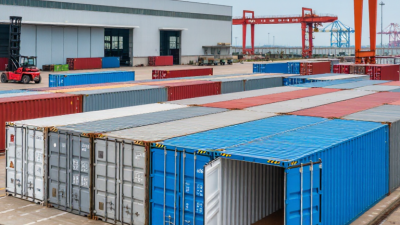
Choosing among China’s top side opening container suppliers requires more than comparing prices. The right supplier should understand your cargo, loading route, climate, and handling equipment. A side opening container may look simple, yet its doors, hinges, seals, flooring, and locking bars affect daily performance. Small defects become expensive during repeated loading.
John Fossey, a container equipment specialist at Drewry, offers a useful principle: “The right container must fit the supply chain, not merely the specification sheet.” This idea matters when reviewing Chinese manufacturers. Ask for factory records, material certificates, welding standards, and recent inspection reports. Check whether the supplier uses weather-resistant steel and durable door seals. Request photographs of hinge details, floor joints, and internal coatings. Better still, arrange an independent pre-shipment inspection.
Experience also matters. A reliable supplier should explain payload limits, door clearance, forklift access, stacking conditions, and delivery schedules clearly. Ask how they handle damaged parts after delivery. Ask again. Vague answers deserve attention.
Price remains important, but the lowest quotation can hide thinner steel, weaker hardware, or limited after-sales support. Compare complete specifications, not only the container body price. Review warranty terms, spare-part availability, production capacity, and export experience. Confirm whether the supplier can provide customization without weakening structural integrity.
There is no perfect checklist. Your operating conditions may expose issues that factory samples cannot show. A careful buyer tests assumptions, documents requirements, and verifies every promise. With disciplined evaluation, businesses can select a China-based side opening container supplier that offers practical value, consistent quality, and dependable long-term service.
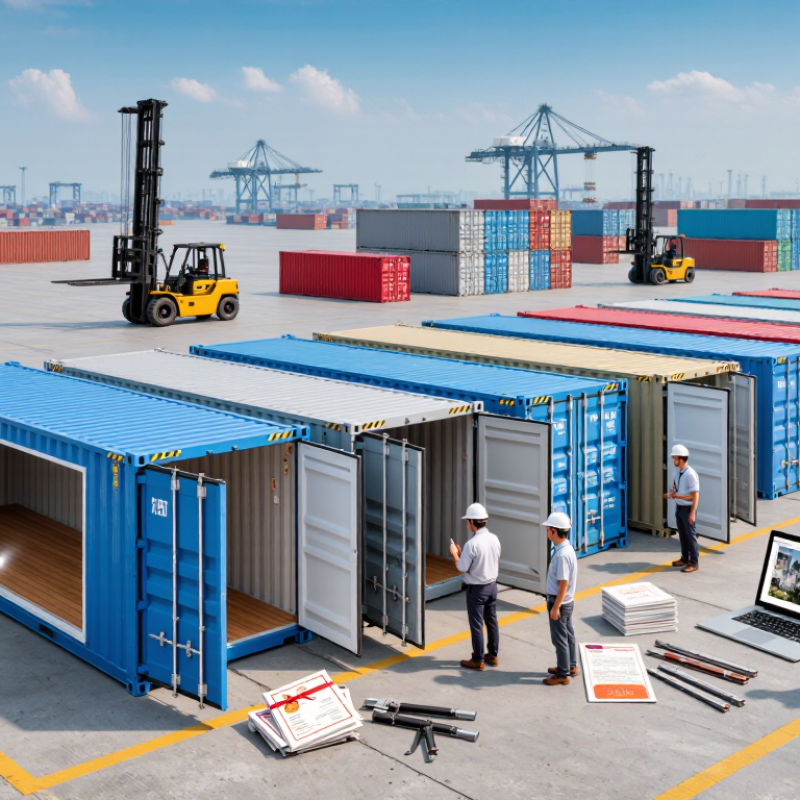
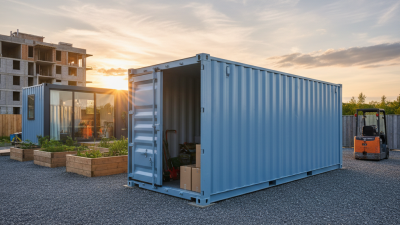
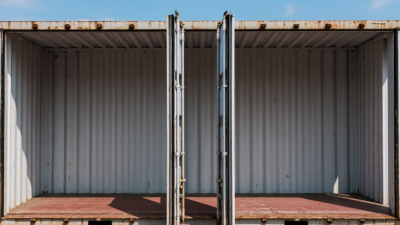
A side opening container is an ISO freight unit with large doors along its long wall. Unlike a standard container, it allows workers and forklifts to reach most of the internal length. Hinged or sliding panels open beside the cargo. Locking bars, hinges, and rubber seals keep the opening secure during transport.
The operating principle is simple. A forklift approaches from the side, places pallets inside, and withdraws without crossing the container’s full length. This helps at narrow sites, temporary warehouses, and loading areas without rear clearance. The frame still uses standard corner castings, so compatible handling equipment can lift and stack it. UNCTAD reported 858.2 million TEUs of global container port throughput in 2023, showing why ISO-compatible dimensions remain commercially important.
Selection requires more than checking the door size.
Review the CSC plate, tare weight, payload, floor capacity, opening width, and seal condition. Ask whether the door design supports forklift loads without excessive deflection. A 40-foot unit may offer more volume, but its side panels can demand careful maintenance. Small dents become serious when seals fail. The choice is not automatic. Inspection records, corrosion photographs, and a trial opening can reveal problems that specifications miss. UNCTAD, Review of Maritime Transport 2024.
A reliable side opening container supplier proves performance beyond attractive photographs. UNCTAD’s Review of Maritime Transport 2023 states that over 80% of global trade by volume moves by sea. That pressure makes structural safety and delivery consistency essential. Check whether the supplier builds to ISO 668 dimensions and supports CSC-related inspection requirements. Ask for material certificates, weld inspection records, and recent load-test evidence. A clear audit trail matters.
Inspect the opening system closely. Doors should move smoothly without scraping the frame. Locking bars must engage evenly, while hinges need protected pins and accessible lubrication points. Examine the floor for strong cross-members, dry timber or approved alternatives, and clean drainage paths. Door seals should remain flexible after temperature changes. Small gaps become expensive problems.
The World Bank’s 2023 Logistics Performance Index evaluates reliability, shipment tracking, and delivery timeliness. A dependable supplier should therefore provide production milestones, packing photographs, serial-number records, and realistic shipping dates. Spare seals and locking parts should be available. Communication matters.
Do not trust promises alone.
A factory visit, independent inspection, and sample review can reveal uneven welds or weak paint preparation. However, no checklist is perfect. I would also compare the supplier’s response after a complaint, not only before payment. That uncomfortable test often shows the real level of expertise.
Comparing China-based side opening container manufacturers requires more than checking the lowest quotation. Ask for factory photos, production records, and recent inspection documents. A reliable supplier should explain steel grades, welding methods, coating systems, and door hardware clearly. Vague answers deserve caution.
Request a sample specification before discussing price. Check the side door width, hinge design, locking rods, floor thickness, and rubber seals. A practical test is simple: open the door repeatedly and inspect alignment afterward. Ask whether the container passed water-tightness and lifting tests. Independent inspection can verify dimensions, weld quality, paint thickness, and load performance.
Look closely at quality control. Does the manufacturer inspect steel before cutting? Are welders trained and documented? Can the factory provide batch numbers for key materials? Delivery promises should include production time, port handling, packaging, and replacement procedures. Written details matter.
Communication is also evidence. A capable technical team will request your cargo type, loading method, climate, and transport route. They should not merely copy a standard drawing. I have seen specifications accepted too quickly, then revised after production began. That mistake creates delays and extra costs. A small trial order may reveal more than a polished presentation. Review the contract carefully, including tolerances, inspection rights, warranty terms, and spare-part availability. Reference checks can help, but they are not perfect. Past performance still needs current verification.
For China top side opening container suppliers, quality checks should go beyond photographs and low prices. UNCTAD’s Review of Maritime Transport 2024 reported that global maritime trade reached about 12.3 billion tons in 2023. This scale makes container reliability a serious supply-chain issue. Request steel grade details, weld inspection records, floor-load data, and door-cycle test results. Check compliance with ISO 668 and ISO 1496-1. The side opening mechanism should move smoothly without frame distortion, uneven gaps, or visible corrosion. Ask for recent inspection videos, not only factory images.
Customization requires measurable drawings. Confirm internal dimensions, opening clearance, floor thickness, locking points, ventilation, paint system, and lifting pockets. A practical review should compare the approved drawing with the finished unit. Small changes can affect forklift access and cargo balance. Certification checks are equally important. Verify a valid CSC safety plate for international transport, plus material certificates and third-party inspection reports. Certificate numbers should match the container identification plate. A document alone proves little.
Tips: Ask for a sample inspection checklist and a corrective-action record. Compare at least three suppliers using the same specifications. UNCTAD’s report also forecasts continued maritime trade growth, increasing the value of durable equipment. Still, not every customization is useful. Extra openings may weaken structure or raise maintenance costs. Independent inspection remains worthwhile, even when the supplier appears experienced. Perfect paperwork does not guarantee perfect workmanship.
China Top Side Opening Container Suppliers: How to Choose?
Selecting the right supplier starts with your actual shipping requirements. Define cargo dimensions, loading methods, weight limits, route conditions, and delivery frequency. A side opening container should match your handling equipment and warehouse space. Ask suppliers for drawings, steel specifications, door measurements, and verified production details. Certifications matter, but documents alone are not enough. Request recent inspection records, material reports, and customer references. A factory video can help, yet an independent pre-shipment inspection offers stronger evidence.
Tips: Compare at least three detailed quotations. Check steel thickness, floor treatment, locking systems, paint quality, and warranty terms. Confirm production capacity and realistic lead times. Ask who pays for repairs if doors arrive damaged. Small details become expensive at the port.
Reliable communication also deserves careful attention. A capable supplier answers technical questions clearly and records agreed specifications. They should explain container testing, moisture protection, spare parts, and transport arrangements. Avoid choosing only by the lowest price. It may exclude inspection, stronger flooring, or after-sales support. Still, higher prices do not guarantee better quality. That is worth remembering. Review payment terms, contract conditions, and delivery responsibilities before placing an order. A detailed sample approval can prevent costly misunderstandings, although it cannot remove every risk.
| Evaluation Dimension | What to Verify with the Supplier | Recommended Benchmark | Why It Matters for Side Opening Containers | Suggested Weight |
|---|---|---|---|---|
| Container Configuration | Confirm whether the unit is a full-side-opening, partial-side-opening, or multi-door configuration. | Configuration should match the loading method, cargo dimensions, forklift access, and available site space. | Different opening layouts affect loading efficiency, structural strength, weather protection, and operating clearance. | 15% |
| Available Sizes | Request drawings and internal dimensions for the selected container length and height. | Common options include 20-foot and 40-foot units; high-cube versions generally provide greater internal height. | Correct dimensions reduce unused space and help prevent cargo interference with doors, posts, and roof structures. | 10% |
| Payload and Gross Weight | Check the nameplate, engineering specification, maximum gross weight, tare weight, and allowable payload. | Many dry freight containers are designed for gross weights around 30,480 kg, but the exact rating must be confirmed for each model. | A side-opening structure can require additional reinforcement, which may influence tare weight and usable payload. | 10% |
| CSC and Regulatory Compliance | Request a valid CSC safety approval plate, test documentation, and any destination-market compliance records. | CSC approval should be valid for international transport when the container will move by sea or across borders. | Without appropriate certification, the container may be rejected by carriers, terminals, or customs authorities. | 15% |
| Door and Locking System | Inspect locking bars, hinges, door seals, handles, safety stops, and the number of side-opening panels. | Doors should open smoothly, lock securely, maintain alignment, and include replaceable weather seals. | Side doors experience frequent movement and are critical to cargo access, security, and water resistance. | 12% |
| Steel and Floor Materials | Verify steel grade, panel thickness, floor material, floor load rating, and treatment against corrosion. | The floor should be suitable for the intended cargo and forklift loading; common container floors use treated timber or engineered alternatives. | Material selection influences durability, cargo safety, total weight, maintenance, and service life. | 10% |
| Weatherproofing | Ask for water-tightness test procedures, seal specifications, roof condition, and drainage details. | The unit should pass a documented water-tightness inspection before shipment and after final assembly. | More openings create more potential leak points, especially during long-distance sea transport and outdoor storage. | 10% |
| Manufacturing Quality Control | Review welding inspection, dimensional inspection, paint inspection, door alignment checks, and final quality records. | Supplier should provide inspection checkpoints, measurable acceptance criteria, and pre-shipment inspection evidence. | Consistent quality is essential for structural integrity and reliable operation of multiple side panels. | 10% |
| Customization Capability | Confirm options for internal partitions, shelving, ventilation, paint color, cargo lashing points, ramps, and access doors. | Customization should be supported by engineering drawings, revised specifications, and a confirmed impact on cost and lead time. | Special cargo and warehouse operations often require features beyond a standard dry container. | 5% |
| Lead Time and Production Capacity | Request a production schedule, monthly capacity, material availability, and estimated completion date. | Lead time should be stated in writing and separated into design approval, production, inspection, and shipping stages. | Side-opening units may require more fabrication and inspection than standard containers. | 5% |
| Total Landed Cost | Compare unit price, inland delivery, export handling, documentation, inspection, freight, insurance, duties, and destination charges. | Use a comparable landed-cost calculation rather than comparing factory quotations alone. | A lower purchase price may be offset by certification, repair, transport, or modification costs. | 5% |
| Warranty and After-Sales Support | Check warranty scope, exclusions, claim response time, spare-parts availability, and responsibility for transit damage. | Warranty terms should cover structural defects and clearly define remedies, documentation, and response procedures. | Replacement seals, hinges, locks, and panels may be needed during the container’s operating life. | 3% |
| Total Suggested Evaluation Weight | 100% | |||