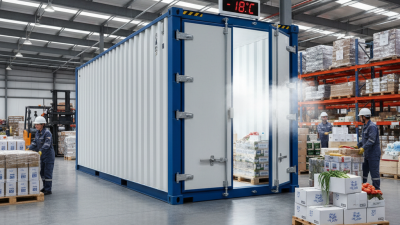
Choosing the right China cold storage container manufacturers requires more than comparing factory prices. Buyers should examine insulation performance, refrigeration stability, structural strength, and after-sales support. A dependable supplier can explain how polyurethane panels, stainless steel surfaces, door seals, and temperature controls work together.
Look closely at real production evidence. Factory photos help, but test reports, material specifications, and shipment records provide stronger assurance. Ask whether the cold storage container has been tested under realistic ambient conditions, including hot weather, frequent door opening, and long-distance transport. These details reveal practical engineering experience.
Temperature consistency matters most.
Experienced manufacturers usually provide clear technical drawings, cooling-capacity calculations, and maintenance guidance. They should also identify suitable temperature ranges for frozen food, fresh produce, pharmaceuticals, or other permitted goods. Certifications may support credibility, but certificates alone cannot prove reliable performance. Independent inspection and sample testing remain valuable.
Small details often affect operating costs. Check power consumption, drainage design, floor loading, lighting, controller accuracy, and replacement-part availability. A supplier that responds clearly to difficult questions is often easier to work with after delivery. However, no manufacturer is perfect. Lead times can change, specifications may require confirmation, and installation conditions can expose hidden problems. This article compares leading Chinese suppliers through practical criteria, helping buyers make a more informed and responsible decision.
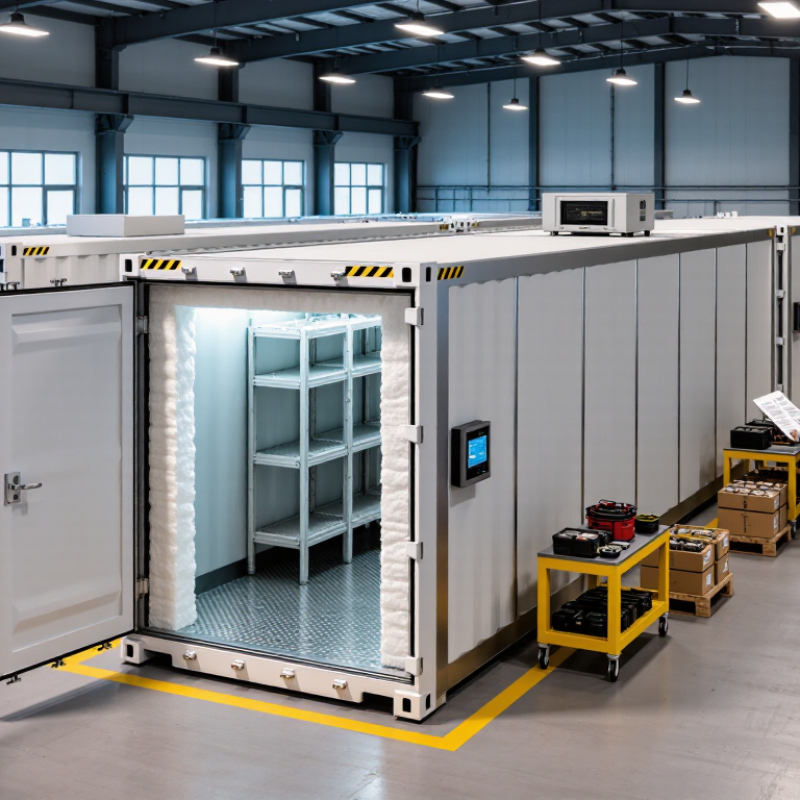
A cold storage container is an insulated, movable room for temperature-sensitive goods. It protects food, medicine, and other products during storage or transport. Its walls contain rigid insulation, often sealed between durable outer panels. The floor also needs insulation because cold air settles and heat enters from below. A refrigeration unit removes heat from inside the container. It does not simply “make cold.” It transfers heat outside.
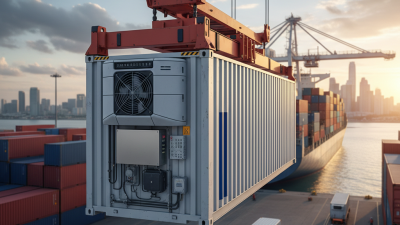
Air moves across an evaporator coil inside the container. Refrigerant absorbs heat from that air, while fans circulate the cooled air evenly. Sensors measure the internal temperature and send readings to a controller. When the temperature rises, the compressor starts automatically. Door openings matter. Warm, moist air enters quickly and may create condensation or frost. Regular defrosting, gasket checks, and drain cleaning help maintain stable operation. The required temperature depends on the cargo, packaging, and storage time.
When assessing a cold storage container from China, request insulation data, cooling-range tests, electrical specifications, and maintenance records. A specification sheet is useful, but it can hide practical weaknesses. A unit may reach -20°C when empty, yet struggle after warm pallets are loaded. Ask how performance was tested. Check the door seal, floor strength, airflow pattern, and emergency release. Clear manuals and responsive technical support also show manufacturing reliability. Small details often decide whether temperature control remains dependable.
Reliable cold storage containers must protect temperature-sensitive goods through long journeys and changing weather. High-density insulation is essential, especially around doors, corners, and floor panels. Weak insulation creates warm spots that may not appear on a basic temperature display.
A dependable unit should use a strong frame, corrosion-resistant panels, and tightly fitting door gaskets. Check the seal by closing the door over a thin sheet of paper. If the paper slides out easily, air may be entering.
Small details matter. Interior surfaces should be smooth and washable, with no exposed gaps that collect moisture.
Accurate sensors and clear alarms help operators respond before goods are damaged. Look for temperature records, power-failure alerts, and easy access to calibration checks. In field inspections, I also examine drainage, cable protection, fan noise, and the condition of hinges. These parts are often ignored. They should not be.
A reliable cooling system needs stable power, simple controls, and accessible service points. Regular testing under full load provides more useful evidence than an empty-container demonstration. No container is perfect, and even a well-designed model can lose performance when doors remain open too long. That practical weakness deserves honest planning.
China Best Cold Storage Container Manufacturers?
How to Evaluate Chinese Cold Storage Container Manufacturers
A reliable evaluation starts with the factory, not its website. Ask for business licenses, production records, quality procedures, and recent export experience. A serious manufacturer should explain insulation density, panel thickness, refrigeration capacity, and tested temperature ranges clearly. Vague answers deserve caution.
Request a video inspection or visit the facility. Check panel joints, door seals, drainage points, wiring, and surface cleanliness. Look for controlled assembly areas and traceable component records. Ask whether each container receives a temperature test before shipment. A data log showing stable cooling is more useful than attractive photographs. Check certification documents carefully, and confirm they match the actual model.
Performance matters during transport and storage. Ask how the unit handles hot weather, frequent door opening, power interruptions, and defrost cycles. Request references from buyers with similar cargo and operating conditions. Review warranty terms, spare-parts availability, response times, and technician support. A low quotation may hide weak insulation or expensive repairs later.
Do not trust one inspection completely. Human error happens. A sample unit can reveal problems that documents miss, especially uneven cooling or poorly fitted seals. Compare at least three factories using the same specifications. Record every promise in the purchase contract, including testing standards, delivery details, and corrective actions. The best manufacturer is not always the cheapest; it is the one that can prove consistent performance when conditions become difficult.
China’s cold storage container industry is concentrated around several practical manufacturing regions. The Yangtze River Delta, including Jiangsu and Zhejiang, offers strong metalworking, insulation panel, and refrigeration supply chains. Factories there often support customized dimensions, modular units, and short-distance component sourcing.
Guangdong and the Pearl River Delta are known for export-oriented production and electrical system integration. Manufacturers commonly build refrigerated containers with digital temperature controls, remote monitoring options, and corrosion-resistant panels. Shandong and the Bohai Rim also have solid capabilities in steel fabrication, large-scale assembly, and agricultural cold-chain equipment. Production quality can vary, even within the same region. A polished factory tour is not enough evidence.
Tips: Ask for insulation thickness, temperature range, cooling recovery time, and factory testing records. Request photos of completed units, not only workshop equipment. Check welds, door seals, drainage points, and controller calibration. Independent inspection is sensible.
Experienced buyers should compare manufacturing depth rather than only quoted prices. A reliable supplier should explain compressor selection, refrigerant handling, load calculations, and maintenance access clearly. Look for documented tests under realistic ambient conditions. Some suppliers may promise extreme performance without showing test data. That deserves careful questioning. Port access also matters, especially for export projects. Coastal factories can simplify container transport, spare-part delivery, and installation coordination. Yet inland producers may offer competitive labor costs and flexible customization. The best choice depends on required volume, destination climate, service expectations, and verification results.
The Yangtze River Delta, Pearl River Delta, and Bohai Rim are China's main manufacturing-linked regions for refrigerated containers. The chart uses 2023 container throughput at major ports as a real, publicly reported indicator of each region's container logistics, export, and supporting industrial ecosystem. Port throughput is a regional proxy and does not represent the output of any individual manufacturer.
Source: Ministry of Transport of the People's Republic of China, 2023 port container throughput statistics. Unit: million TEU.
China Best Cold Storage Container Manufacturers?
Quality begins with verification, not catalog photography. Reliable manufacturers should provide ISO 668 dimensions, ISO 1496-2 testing records, and temperature-mapping results. Ask for compressor performance at both ambient extremes. A container that holds 2°C in a factory may struggle at 40°C outdoors. FAO reports that about 14% of food is lost between harvest and retail. Better insulation and monitoring can reduce avoidable waste, although no container fixes poor loading practices.
Customization should match the cargo, route, and power supply. Common options include remote temperature tracking, stainless-steel floors, ramp doors, shelving, and dual-voltage systems. Request a written pull-down test, alarm thresholds, and data logger calibration. Small details matter. Door seals often decide performance. Pricing should include insulation thickness, refrigeration capacity, warranty terms, spare parts, and commissioning. A low quote can still be the wrong quote. Total cost of ownership is easy to underestimate.
Export support separates a convenient supplier from a dependable one. Confirm electrical certifications, packing methods, serial-number traceability, and manuals in the destination language. The World Bank’s 2023 Logistics Performance Index shows that customs efficiency and shipment tracking remain major logistics factors. Manufacturers should therefore provide commercial invoices, packing lists, test certificates, and clear after-sales contacts. Lead times can change. Ports, seasonal demand, and replacement-part availability deserve written confirmation before payment.
| Evaluation Dimension | Typical Quality Standard or Technical Data | Common Customization Options | Indicative Pricing Considerations | Export Support and Documentation |
|---|---|---|---|---|
| Container Structure | ISO-size containers commonly follow 20-foot or 40-foot external dimensions. A 20-foot container is approximately 6.06 m long, while a 40-foot container is approximately 12.19 m long. Structural design should be suitable for lifting, stacking, and transport. | Internal shelving, reinforced floors, forklift-accessible floor systems, personnel doors, service doors, ramps, viewing windows, and non-standard external dimensions can be specified. | Structural reinforcement, custom doors, special flooring, and non-standard dimensions generally increase fabrication and transport costs. | Typical documents include commercial invoices, packing lists, structural drawings, lifting instructions, and container identification details. |
| Insulation Performance | Refrigerated containers commonly use polyurethane or similar high-performance insulation panels. Insulation thickness is often approximately 60–100 mm, depending on the design and target temperature. | Insulation thickness, floor insulation, thermal bridges, vapor barriers, hygienic wall finishes, and washable interior surfaces can be adapted for food, pharmaceutical, or industrial use. | Thicker insulation, improved thermal bridging control, and food-grade interior finishes normally increase the initial price but can reduce energy loss. | Thermal specifications, insulation material information, product drawings, and installation or maintenance instructions may be supplied for customs and project approval. |
| Temperature Range | Typical refrigerated applications cover approximately -25°C to +25°C. Deep-freezing designs may reach about -35°C to -40°C, subject to refrigeration equipment, ambient conditions, and load requirements. | Temperature zones, independent compartments, remote temperature monitoring, data logging, alarm systems, humidity control, and automatic defrost functions can be requested. | Multi-temperature zones, low-temperature operation, remote monitoring, and redundant refrigeration systems usually add to equipment and commissioning costs. | Temperature-performance test records, operating manuals, calibration certificates, and commissioning reports can support destination-country inspections. |
| Refrigeration System | A complete system normally includes a compressor, condenser, evaporator, expansion device, controller, temperature sensors, and protective safety components. Electrical configuration must match the destination market. | Voltage and frequency, cooling capacity, controller language, remote monitoring, standby power, emergency alarms, and alternative refrigerant configurations may be specified. | Cooling capacity, energy efficiency, control features, refrigerant selection, and local electrical requirements are major price drivers. | Electrical schematics, wiring diagrams, refrigerant information, safety data, spare-parts lists, and user manuals are commonly required for international shipment. |
| Temperature Control Accuracy | Many commercial systems target temperature control within approximately ±1°C to ±3°C, depending on the controller, airflow, load profile, door opening frequency, and ambient temperature. | Tighter control bands, additional sensors, automatic alarms, digital displays, cloud monitoring, and historical temperature reports can be added. | Higher sensor density, calibrated instruments, data logging, and validated temperature mapping increase testing and equipment costs. | Factory acceptance test records, calibration reports, temperature-mapping results, and alarm verification records may be provided for regulated cargo. |
| Electrical Requirements | Common refrigerated-container power supplies include three-phase 380–460 V systems at 50 or 60 Hz. The exact requirement depends on the refrigeration unit and destination infrastructure. | Local plug types, electrical protection, phase monitoring, generators, shore-power connections, transformers, and backup batteries can be incorporated. | Generator sets, transformers, special plugs, backup power, and destination-specific electrical certification can materially affect the total cost. | Electrical compliance documents, cable specifications, plug details, circuit diagrams, and conformity declarations may be included in the export file. |
| Food and Pharmaceutical Hygiene | Interior surfaces should be corrosion-resistant, smooth, sealed, washable, and suitable for the intended cargo. Pharmaceutical applications may require validated temperature uniformity and documented quality procedures. | Stainless-steel lining, coved flooring, hygienic seals, removable shelving, cleanroom-compatible surfaces, lighting, and sanitary drainage can be specified. | Stainless-steel interiors, hygienic construction, validation testing, and pharmaceutical-grade monitoring generally carry a higher cost than standard cargo configurations. | Material declarations, cleaning instructions, test reports, validation protocols, and quality-control records may be requested by the importer or end user. |
| Safety and Compliance | Transportable containers may require compliance with applicable ISO container requirements and the International Convention for Safe Containers (CSC). Electrical and machinery requirements depend on the destination and application. | Emergency release doors, internal safety releases, non-slip flooring, lighting, fire detection, pressure-relief features, warning labels, and safety interlocks can be added. | Third-party inspections, certification, safety accessories, special labeling, and destination-specific compliance testing add to project cost. | Possible documentation includes CSC-related records, inspection certificates, electrical test reports, risk assessments, declarations of conformity, and safety manuals. |
| Indicative Price Range | Budgetary market ranges for new refrigerated shipping containers are often approximately USD 30,000–50,000 for 20-foot units and USD 45,000–75,000 for 40-foot units, depending on specification and equipment. | Custom temperature zones, special interiors, monitoring systems, generators, pharmaceutical validation, and non-standard dimensions can significantly increase the quotation. | Final pricing depends on refrigeration capacity, insulation, steel condition, equipment configuration, quantity, testing, Incoterms, inland delivery, and ocean freight. | A professional quotation should identify product specifications, quantity, lead time, warranty, spare parts, Incoterms, packing method, and the scope of export documentation. |
| Lead Time and Production | Standard configurations may require approximately 6–12 weeks after drawing approval and deposit. Complex projects may require additional engineering, testing, and certification time. | Factory layout drawings, 3D models, prototype approval, sample testing, color selection, branding-free labeling, and staged production inspections can be arranged. | Short lead times, prototype production, low-volume orders, special materials, and expedited logistics may increase the total project budget. | Export planning may include production progress updates, pre-shipment inspection, loading photographs, container numbers, shipping documents, and after-sales coordination. |
| Warranty and After-Sales Service | Commercial warranty periods commonly range from 12 to 24 months, subject to the contract, operating conditions, maintenance records, and excluded consumable parts. | Extended warranty, preventive-maintenance plans, remote diagnostics, spare-parts packages, technician training, and local service partnerships can be negotiated. | Longer warranties, stocked spare parts, service-level agreements, and on-site commissioning typically increase the purchase price or service fee. | The supply package should define warranty coverage, response time, replacement-part availability, technical support channels, and procedures for international claims. |