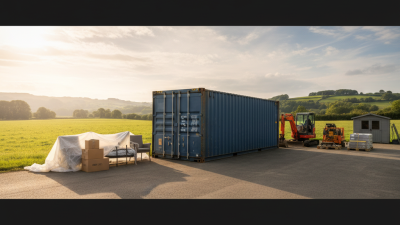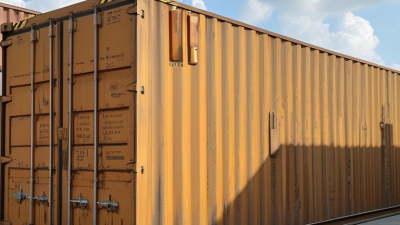
Choosing the right mini shipping container begins with the cargo, not the price tag. A compact unit may look convenient, yet its internal width, door opening, and payload can limit practical use. Measure the largest item carefully. Then measure the doorway, driveway, lifting area, and storage surface. A few centimeters matter.
Container-equipment consultant Peter Jones offers a useful reminder: “The right container fits the cargo, the route, and the handling equipment.” That principle guides this article. A mini shipping container should match your real operating conditions. Check steel thickness, floor condition, lock-bar movement, roof integrity, ventilation, and weather seals. Inspect clear photographs, but do not trust photographs alone. A recent inspection report is stronger evidence.
Think beyond today’s delivery. Will a truck reach the site? Can a crane, forklift, or delivery trailer position the unit safely? Does the supplier explain whether the container is new, refurbished, or used? These details affect cost and reliability. Local planning, transport, and placement requirements may also apply, so confirm them with the relevant authority.
There is no perfect checklist. It can still miss a damaged corner post or a difficult access turn. That is why experienced buyers compare specifications with the site itself. This guide explains how to evaluate size, security, condition, mobility, and supplier credibility. The goal is simple: choose a mini shipping container that works in the real world, not merely one that looks suitable on a product page.
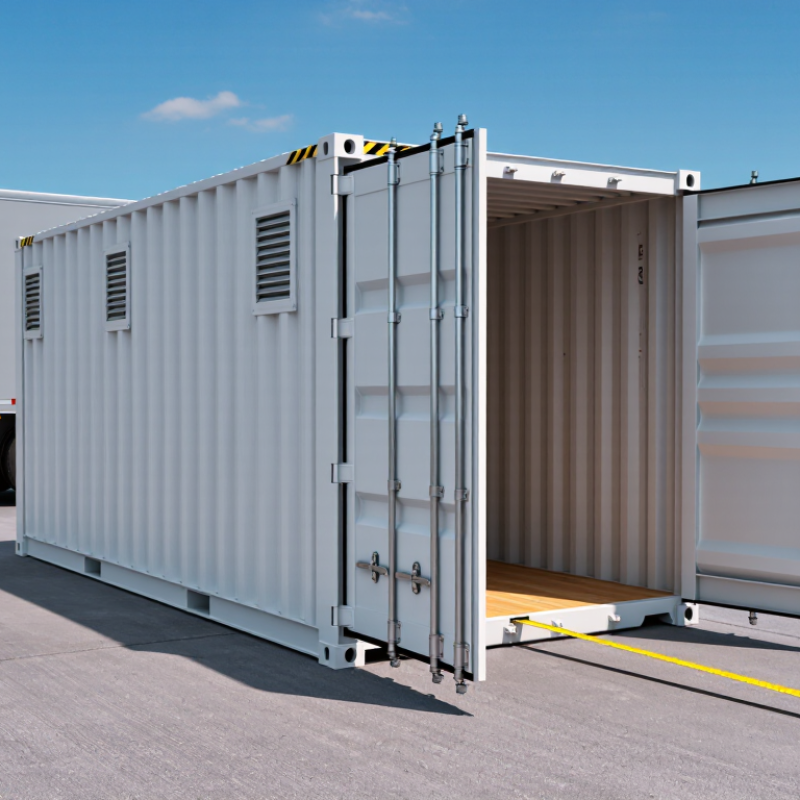
Mini shipping containers are compact freight or storage units, usually measuring 6, 8, or 10 feet long. They suit narrow driveways, small construction sites, workshops, and temporary storage areas. A six-foot unit fits beside a garage. An eight-foot model offers more usable floor space without feeling oversized. Ten-foot containers can hold larger equipment, boxed materials, or several standard pallets, depending on pallet dimensions and internal clearances.
ISO 668 defines dimensions, ratings, and classification for Series 1 freight containers. However, not every small container automatically meets this standard. Some 10-foot units follow Series 1 design principles, while many six-foot models are purpose-built. Check the manufacturer’s dimensional plate, corner fittings, rated gross mass, and inspection documents. Do not trust the label alone. It can be misleading.
Measure the delivery route carefully. Include gate width, turning space, overhead cables, and the door’s swing area. A forklift pocket may simplify placement, but it does not guarantee safe handling. Check the floor load rating before storing machinery or dense materials. Ventilation openings help reduce condensation, especially when temperature changes quickly. A weather-resistant lock enclosure adds practical security. An easy mistake is choosing by length only. Internal width, door height, floor condition, and access often matter more than the advertised size.
Capacity matters more than appearance. Mini shipping containers usually provide 8–15 m³ of internal volume. Their typical payload ranges from 1,000 to 3,000 kg. A compact 8 m³ unit may suit tools, cartons, or household equipment. A 15 m³ unit offers more floor space, but not automatically more payload. Internal volume measures space, while payload measures safe cargo weight.
The cargo’s density should guide your choice. Light, bulky items may fill 15 m³ before reaching 1,000 kg. Dense machinery can exceed 3,000 kg inside a smaller unit. ISO 668:2020 establishes container dimensions and rating principles, but each unit still requires inspection. Check the door plate, tare weight, floor rating, and lifting points. UNCTAD’s Review of Maritime Transport 2024 highlights the importance of efficient containerized cargo handling and equipment reliability. That principle applies even to small units.
Tips: Measure packed cargo, not empty products. Leave clearance for doors and tie-downs. Keep heavy items low and centered. Confirm the certified payload before loading. A practical mistake is choosing by cubic metres alone. I would also allow roughly 10% spare space, although this is not a universal rule. Loading method, axle limits, moisture protection, and handling equipment can change the real choice. The cheapest container may become inefficient when access is narrow or the floor cannot support concentrated loads.
How to Choose the Right Mini Shipping Container?
Material choice affects durability, maintenance, and security. Corten steel develops a protective surface layer when exposed to weather. This reduces ongoing corrosion, but it does not make the container maintenance-free. Check the roof, corner posts, door frame, and underside for standing water or deep rust. A small drainage problem can become expensive later.
Security depends on more than a strong door. A recessed lockbox can shield the padlock from bolt cutters, rain, and accidental impacts. Look for a box made from thick steel, with clean welds and enough space for your chosen lock. Test the door alignment before delivery. If the locking bars scrape or bind, daily use will become frustrating. This detail is easy to overlook.
For international transport, confirm the container has valid CSC approval and a readable safety plate. The plate should show identification details, maximum gross weight, and inspection information. CSC compliance supports safe lifting and stacking under applicable transport requirements. However, not every mini container is designed for ocean movement. Ask for current inspection records, not only a sales description. I would also measure the planned forklift access twice. My judgment can still be wrong when site drawings are outdated, so a physical check remains worthwhile.
| Assessment Dimension | Corten Steel Mini Container | Galvanized Steel Mini Container | Aluminum Mini Container | Practical Selection Guidance |
|---|---|---|---|---|
| Primary Material | Weathering steel designed to form a protective oxide layer under suitable wet-and-dry exposure. | Carbon steel protected by a zinc coating that provides barrier and sacrificial corrosion protection. | Aluminum alloy with naturally forming oxide protection and a lower structural density than steel. | Choose steel for higher impact resistance; consider aluminum when low weight and corrosion resistance are priorities. |
| Typical Corrosion Performance | Good in suitable inland environments | Good when the zinc coating remains intact | Good in many humid environments | For marine or chloride-rich locations, specify suitable coatings, drainage, fasteners, and a documented maintenance plan. Corten steel may perform poorly where surfaces remain continuously wet or exposed to salt. |
| Structural Strength | High | High | Moderate to high, depending on alloy and design | Confirm frame design, corner posts, roof capacity, door construction, and allowable stacking load rather than judging strength from material alone. |
| Common Mini-Container Footprint | Common nominal lengths include approximately 6 ft, 8 ft, and 10 ft; widths and heights vary by manufacturer. | Common nominal lengths include approximately 6 ft, 8 ft, and 10 ft; widths and heights vary by manufacturer. | Mini sizes are available, but dimensions and structural layouts vary substantially. | Request external and internal dimensions, door opening, tare mass, payload rating, and floor height on the product specification sheet. |
| Lockbox / Padlock Protection | Recommended for outdoor storage; shields the padlock from direct cutting and weather exposure. | Recommended for outdoor storage; shields the padlock from direct cutting and weather exposure. | Recommended where the door frame is engineered to resist prying forces. | A lockbox improves padlock protection but is not a substitute for a strong door, protected hinges, adequate anchoring, and controlled site access. |
| Door and Hinge Security | Prefer steel double doors with recessed or protected hinges and a continuous locking bar. | Prefer steel double doors with recessed or protected hinges and a continuous locking bar. | Verify hinge reinforcement and door-frame strength because lighter sections may be more vulnerable to deformation. | Check the number of locking points, hinge exposure, door overlap, weld quality, and resistance to prying. |
| CSC Compliance | Material alone does not establish compliance. The unit must be designed, inspected, and plated under the applicable CSC requirements when used in international transport. | Material alone does not establish compliance. The unit must be designed, inspected, and plated under the applicable CSC requirements when used in international transport. | Material alone does not establish compliance. The unit must be designed, inspected, and plated under the applicable CSC requirements when used in international transport. | Ask for a valid CSC safety approval plate and supporting documentation. A storage-only unit does not automatically qualify for international carriage. |
| CSC Plate Information to Verify | Approval reference, maximum gross mass, allowable stacking load, transverse racking test load, and inspection or examination information. | Approval reference, maximum gross mass, allowable stacking load, transverse racking test load, and inspection or examination information. | Approval reference, maximum gross mass, allowable stacking load, transverse racking test load, and inspection or examination information. | Ensure the plate is legible, permanently attached, consistent with the unit identification, and supported by current inspection records where required. |
| Floor and Moisture Control | Use a sound timber or steel floor, raised support points, clear drainage paths, and ventilation to reduce condensation. | Use a sound timber or steel floor, raised support points, clear drainage paths, and ventilation to reduce condensation. | Check for galvanic corrosion where aluminum contacts steel, especially in damp or salty environments. | Inspect floor condition, underside protection, drainage holes, door seals, and evidence of standing water before purchase. |
| Best-Fit Application | Long-term outdoor storage and demanding handling where a robust steel structure is required. | General outdoor storage where predictable corrosion protection and steel strength are important. | Projects where reduced tare weight or resistance to certain atmospheric corrosion conditions is valuable. | Match the material to the environment, handling method, security risk, expected service life, and whether international transport is required. |
| Important note: “Corten steel” describes a weathering-steel material, while “CSC compliant” describes a regulatory safety-approval status. A container can use Corten steel without being CSC-approved, and a CSC plate should never be assumed solely from the container material. | ||||
Choosing a mini shipping container starts with the cargo, not the exterior finish. A dry container suits boxed tools, furniture, packaged materials, and goods needing clean, enclosed storage. Check the internal dimensions before loading. A few centimeters can change everything.
Refrigerated containers serve temperature-sensitive products, but they require steady power and careful monitoring. Keep a thermometer inside. Record readings during long storage. A cold unit may still fail if the door seal is worn or the power supply is unstable. That detail is easy to miss. An open-top container helps when cargo is tall, heavy, or lifted from above. It can hold machinery, timber, or awkward equipment more easily. However, open access increases exposure to rain and dust. Use a suitable cover, and plan lifting clearance before delivery.
Side-opening containers work well when workers need frequent access along the full length. They reduce repeated unloading when items are arranged on pallets or shelves. Doors need level ground and enough operating space. Measure the site, including nearby walls, vehicles, and turning areas. In practical loading work, I have seen people choose capacity first and access second. That often creates wasted space or difficult handling. A simple loading sketch may prevent that mistake. Still, real cargo rarely fits perfectly. Leave room for safe movement, ventilation, and inspection.
This comparison shows representative internal volume for standard 20-foot container configurations. Dry containers provide the most general-purpose space, refrigerated containers sacrifice volume for insulation and cooling equipment, open-top containers support overhead loading, and side-opening containers improve access along the container length. Actual dimensions vary by design, so confirm the supplier’s specifications before purchasing.
Choosing a mini shipping container involves more than comparing purchase prices. Delivery can change the final cost quickly. Ask for a written quote separating freight, loading, unloading, permits, and waiting time. Weight matters because a loaded unit may require stronger lifting equipment and a heavier-duty vehicle. An empty container still has a transport weight. Do not guess it.
Transport limits also depend on container length.
A 20-foot unit is often easier to move through ordinary access routes. A 40-foot unit needs more turning space and careful route planning. Some roads, bridges, or local restrictions may limit vehicle size. Confirm the carrier’s maximum length, height, and weight before ordering. Measure the route, not just the destination.
Site access is where many delivery plans fail.
Check gate width, overhead cables, trees, slopes, soft ground, and the distance from the road. A truck may need space to reverse or use lifting equipment. Send clear photos and measurements, including tight corners.
I once underestimated a narrow entrance; the extra repositioning cost was avoidable.
Delivery estimates can still change with weather or traffic. Leave some room in your budget and available space.