2026 Best Refrigerated Storage Containers for Global Buyers

Global buyers need more than a cold box with a reassuring product label. They need a refrigerated storage container that protects food, pharmaceuticals, and temperature-sensitive materials during real operational pressure. A warm loading dock, delayed customs inspection, unstable electricity, or repeated door opening can change performance quickly. The best choice depends on cargo type, storage duration, ambient climate, power availability, monitoring systems, and service support.

Dr. Judith Evans, a respected refrigeration researcher, expresses the core principle clearly: “Temperature control is a chain, not a single machine.” That idea should guide every comparison in this 2026 buying guide. We examine insulation thickness, refrigeration capacity, temperature range, humidity control, remote alerts, internal airflow, door-seal quality, cleaning access, and energy consumption. We also consider practical details, such as whether technicians can reach a remote warehouse and whether replacement parts are available locally.

No container performs perfectly in every market. A unit that works efficiently in Rotterdam may require different settings in Dubai or Singapore. Some published specifications also look impressive until real loading patterns expose weak airflow or slow recovery. This guide therefore focuses on evidence, operating experience, manufacturer documentation, and transparent limitations. Product rankings may need revision as technology, energy prices, and regional supply conditions change. Buyers should still verify current certifications, warranty terms, service coverage, and compatibility with their cargo before purchasing. The strongest refrigerated storage container is not always the most expensive. It is the one that maintains stable conditions when daily operations become inconvenient.
2026 Best Refrigerated Storage Containers for Global Buyers

What Refrigerated Storage Containers Are and How They Work

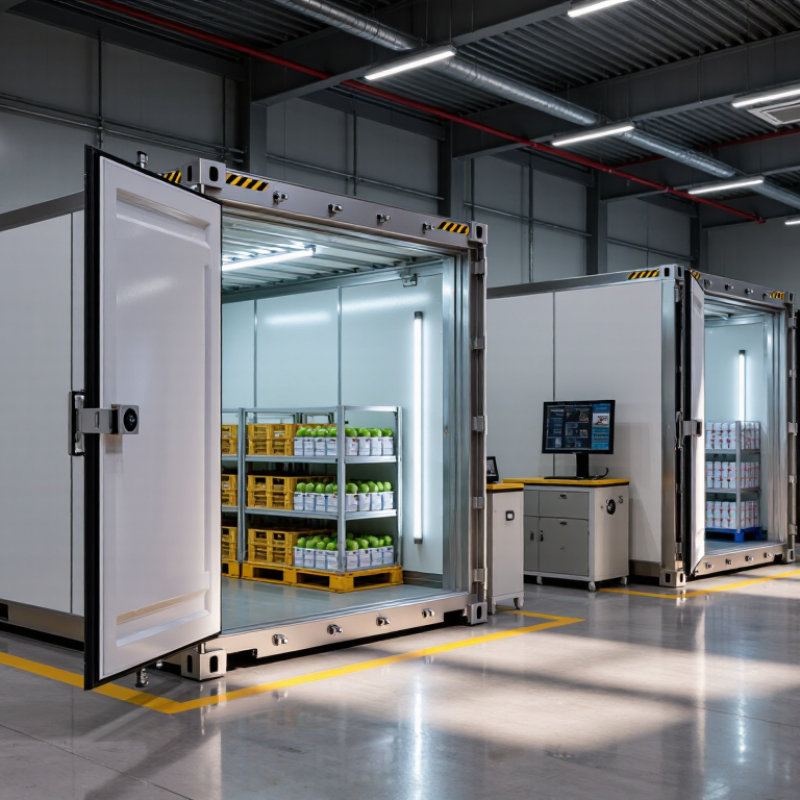
Refrigerated storage containers are insulated units that protect temperature-sensitive goods during storage and transport. Larger units use mechanical refrigeration, while smaller boxes may rely on gel packs or phase-change materials. A reefer container typically uses a compressor, condenser, evaporator, fans, and digital controls. The system removes heat from inside the container and releases it outside.

Airflow matters as much as the set temperature. Cold air moves through floor channels, travels around the cargo, and returns to the refrigeration unit. Blocked vents can create warm pockets near the center of a pallet. Many units support ranges from about -30°C to +30°C, depending on the cargo and equipment. The International Institute of Refrigeration reports that refrigeration uses roughly 17% of global electricity, making insulation and efficient operation important. Small choices matter.

Operators should pre-cool the product before loading. A container maintains temperature; it is not designed to rapidly cool warm cargo. Sensors record temperature, humidity, door openings, and power interruptions. The UN Environment Programme’s Sustainable Food Cold Chains report indicates that better cold-chain access could prevent over 140 million tonnes of food loss annually in developing regions. That figure shows the system’s value, but field conditions remain difficult. A loose door seal, delayed loading, or inaccurate sensor can undermine careful planning. The weak point is often handling. Human checks still matter.

Key Features That Define High-Quality Refrigerated Containers

2026 Best Refrigerated Storage Containers for Global Buyers

Key Features That Define High-Quality Refrigerated Containers

A high-quality refrigerated container begins with stable temperature control. Buyers should check the operating range, cooling recovery time, and temperature uniformity. A narrow variation protects fresh produce, seafood, dairy, and temperature-sensitive ingredients during long storage periods. Small details matter. Door gaskets must close evenly, while insulated panels should resist moisture absorption and thermal bridging.

Independent monitoring is equally important. A calibrated data logger should record temperature continuously, not only display the current reading. Remote alarms can identify power loss, open doors, or compressor failure before cargo quality declines.

The FAO’s State of Food and Agriculture 2019 estimates that 14% of food is lost between harvest and retail.

Better monitoring cannot prevent every loss, but it can reduce avoidable temperature damage.

Energy performance also affects total ownership cost. Efficient compressors, variable-speed fans, and strong insulation reduce electricity demand in warehouses and transit yards.

The UNEP Food Waste Index Report 2024 reported 1.05 billion tonnes of food waste in 2022, showing why storage efficiency matters beyond shipping budgets.

Buyers should also inspect corrosion protection, drain design, cleanable surfaces, and spare-parts access. A technically impressive unit may still disappoint if maintenance is difficult.

Not always. Field trials, seasonal testing, and real cargo simulations reveal weaknesses that product sheets often miss.

How to Compare Sizes, Materials, Cooling Systems, and Energy Use

Choosing refrigerated storage containers for 2026 requires more than checking the advertised capacity. Global buyers should compare usable space, insulation thickness, cooling performance, and energy consumption together. Measure the actual storage area, not only the external dimensions. A 60-liter container may hold less after insulation, baskets, and cooling hardware are installed.

Material affects hygiene, strength, and long-term maintenance. Stainless steel resists odors and repeated cleaning, while food-grade plastic can reduce weight and cost. Check the lid seal carefully. A weak gasket can waste energy and create warm corners.

Small details matter. I once focused too heavily on capacity and overlooked cleaning access. That choice made daily handling slower than expected.

Cooling systems also behave differently. Compressor units usually provide stronger cooling in hot environments, but they may draw more power during startup. Thermoelectric systems can be quieter and simpler, yet their performance may decline in high ambient temperatures. Buyers should request test results at realistic room temperatures. Compare watt-hours per day, recovery time after opening, and standby consumption. Voltage compatibility and plug requirements deserve equal attention. An energy label alone may not reveal real operating costs. Ask whether testing used an empty container or a full load. That difference can be significant. I still treat projected savings cautiously, because frequent door opening changes actual usage. Reliable suppliers should provide clear specifications, maintenance guidance, and documented temperature performance.

Safety, Compliance, and Transport Requirements for Global Buyers

For global buyers, refrigerated storage containers must protect product temperature, people, and transport integrity. A suitable unit should use food-contact-safe materials, secure lids, smooth seams, and insulation without exposed fibers. Ask for migration tests, material declarations, and cleaning instructions before purchase. Temperature performance matters more than a bright specification sheet. Test it. Load a sample container, place data loggers inside, and measure recovery after repeated opening.

Compliance changes with destination, cargo type, and transport mode. Buyers should check applicable food-contact, labeling, sanitation, and packaging rules with local authorities or qualified compliance specialists. For air, sea, road, or rail movements, confirm size limits, stacking strength, leak resistance, and temperature-control procedures. If a container holds gel packs or dry ice, verify ventilation, handling, and carrier requirements before dispatch. Documentation should match the physical product, including material grade, dimensions, test results, and batch traceability. Paperwork gets overlooked.

During inspections, I look for warped lids, cracked corners, trapped moisture, and labels that fade after washing. These small failures can break a cold chain quietly.

Use calibrated thermometers, record loading times, and define acceptable temperature limits before shipment. Do not rely on one factory test; independent verification is stronger.

No container is perfect. Heavy lids may improve sealing but slow warehouse handling. A thinner design may reduce freight cost but lose temperature stability. That trade-off deserves a live trial, not an assumption.

How to Select the Best Refrigerated Storage Container for Your Needs

Choosing the best refrigerated storage container starts with the product, not the container’s appearance. Identify the required temperature range, storage duration, and expected load size. Fresh produce may need airflow, while frozen goods require stronger insulation and stable low temperatures. A tight door seal matters. Even a small gap can increase energy use and create uneven cooling.

Check the interior material, drainage design, and cleaning access before purchasing. Food-contact surfaces should be durable, smooth, and easy to sanitize. For larger units, review insulation thickness, cooling capacity, stacking limits, and power requirements. A temperature display is useful, but an independent data logger provides more reliable records. This detail is often overlooked. It should not be.

Tips: Measure the available space first. Leave room for ventilation and door movement. Avoid filling the container completely, because blocked air circulation can produce warm areas. Test the temperature with a real load, not an empty container. Inspect the seal after repeated opening. Condensation may reveal a hidden problem. Consider transport conditions, local maintenance support, replacement parts, and climate differences between regions. A container suitable for a cool warehouse may struggle in a humid port or hot delivery area. The perfect option rarely exists; a practical choice depends on your operating routine.