
10 Freight Container Tips for Global Buyers?
Buying a freight container can look simple from a screen. A steel box, a quoted price, and a delivery date seem sufficient. They are not. Global buyers must assess condition, dimensions, certification, floor strength, door operation, and delivery access before committing funds. A low price may hide repair costs, local taxes, inland transport, or unsuitable specifications.
Transport geographer Jean-Paul Rodrigue describes the container as “the basic unit of intermodal transport.” That idea matters because one box may travel by truck, rail, ship, and crane. Its design must support every stage. Buyers should inspect corner castings, roof panels, locking bars, seals, and visible corrosion. Photographs help, but they cannot replace a physical inspection. Ask for recent images, inspection records, and clear descriptions of damage. Get everything in writing.
This guide presents ten practical freight container tips for global buyers. It covers sizing, grades, materials, supplier checks, shipping arrangements, and total ownership costs. It also considers insulation, ventilation, security, and future use. Small details matter. A worn door gasket can admit rain. A damaged floor can delay loading. A container may look sound and still fail your operational needs. That is the uncomfortable part. No checklist catches everything. Buyers should question assumptions, compare independent quotations, and allow time for professional inspection. Experience improves judgment, but careful verification remains essential. The strongest purchase is not always the cheapest one. It is the container that arrives fit for purpose, with dependable documentation and predictable costs.
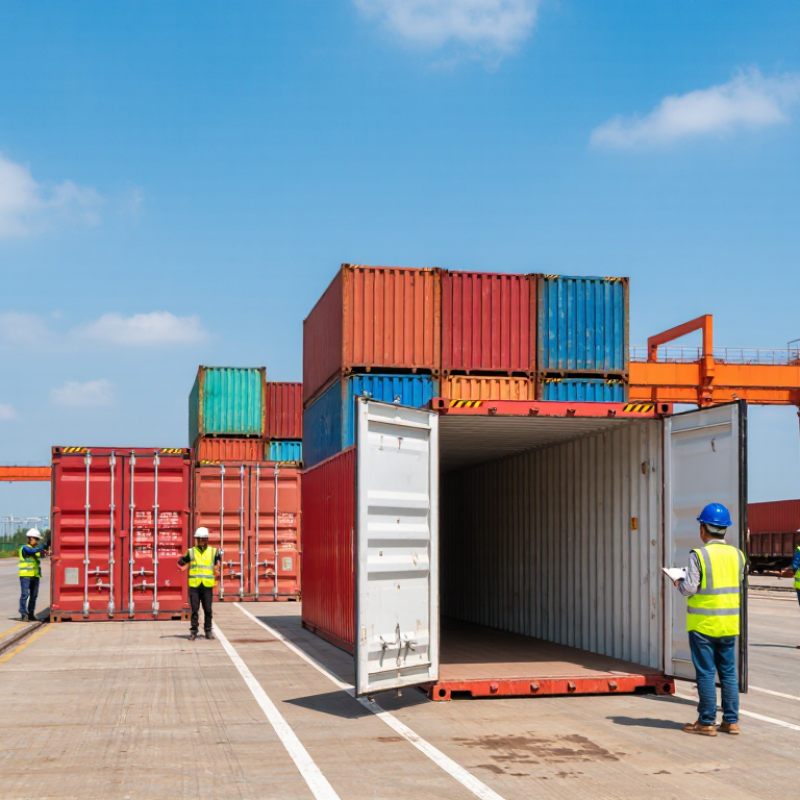
Select ISO 668 Container Sizes: 20-Foot and 40-Foot Standard Options
10 Freight Container Tips for Global Buyers: Choose ISO 668 Sizes Carefully
ISO 668 provides the basic dimensions for common freight containers. A standard 20-foot container measures about 6.058 meters long and 2.438 meters wide externally. The 40-foot version doubles the length to approximately 12.192 meters. Both usually stand 2.591 meters high. Internal measurements vary slightly by manufacturer, tare weight, and construction. Measure twice.
For dense cargo, the 20-foot option can be more practical. Its shorter floor reduces unused space when the shipment is heavy but compact. A 40-foot container offers nearly twice the floor length, helping with cartons, furniture, and lighter packaged goods. However, volume is not the only limit. Check the container’s maximum gross weight, door opening, floor rating, and available cubic capacity before booking. Space disappears quickly around pallets and corner posts.
UNCTAD’s Review of Maritime Transport 2024 reported approximately 858 million TEUs of global container port throughput in 2023. That scale shows why standard dimensions support efficient handling across ships, terminals, railways, and trucks. Yet ISO size does not guarantee identical usable space. I have seen buyers rely on nominal dimensions and discover that packaging prevented the final pallet from entering. Leave a loading margin, confirm local transport restrictions, and request current specification sheets. A small measurement error can create a large logistics cost.
| No. | Container Option | ISO Nominal Size | Typical External Dimensions (L × W × H) |
Approximate Internal Volume | Typical Tare Weight | Common Maximum Gross Weight* | Buyer Tip and Selection Guidance |
|---|---|---|---|---|---|---|---|
| 1 | Standard Dry Container | 20-foot standard | 6.058 × 2.438 × 2.591 m (20 × 8 × 8 ft 6 in) |
Approximately 33 m³ | Approximately 2,200–2,400 kg | Up to 30,480 kg, subject to the container’s safety plate and transport regulations | Choose this size for dense cargo, pallets with a moderate volume, machinery, metal products, and shipments where payload weight is reached before available space. |
| 2 | Standard Dry Container | 40-foot standard | 12.192 × 2.438 × 2.591 m (40 × 8 × 8 ft 6 in) |
Approximately 67 m³ | Approximately 3,700–4,000 kg | Up to 30,480 kg, subject to the container’s safety plate and transport regulations | Use this option for lighter, high-volume cargo. Confirm the cargo weight, because a 40-foot container does not normally provide twice the permissible gross weight of a 20-foot container. |
| 3 | Floor and Door Planning | 20-foot standard | Door opening is commonly about 2.34 m wide × 2.28 m high | Internal dimensions vary by construction | Check the individual tare marking | Use the certified maximum gross weight shown on the container | Measure cartons, pallets, skids, and machinery before ordering. Allow clearance for packaging, lashing, forklift access, and uneven loading. |
| 4 | Floor and Door Planning | 40-foot standard | Door opening is commonly about 2.34 m wide × 2.28 m high | Internal length is approximately 12.03 m in many standard units | Check the individual tare marking | Use the certified maximum gross weight shown on the container | Verify that the full cargo plan fits the usable internal length. A small difference in internal dimensions can affect pallet count and loading efficiency. |
| 5 | Weight Distribution | Both 20-foot and 40-foot | External width is nominally 2.438 m | Volume is less important than payload for dense goods | Tare weight reduces available payload | Gross weight = tare weight + cargo weight | Distribute weight evenly across the floor and comply with axle limits, road rules, and any port or rail restrictions. Never rely only on cubic capacity. |
| 6 | Pallet Compatibility | 20-foot standard | Internal width is commonly about 2.35 m | Approximately 11 Euro-pallet positions in common loading plans, depending on orientation | Confirm floor load rating and condition | Follow the marked maximum gross weight | Create a scale drawing before booking. Pallet dimensions, overhang, access space, and the loading method can change the practical capacity. |
| 7 | Pallet Compatibility | 40-foot standard | Internal width is commonly about 2.35 m | Approximately 23 Euro-pallet positions in common loading plans, depending on orientation | Confirm the individual tare and floor condition | Weight limits may be reached before all positions are used | Use a 40-foot unit when cargo is relatively light and cube-intensive. For heavy pallets, compare the total shipment weight with the permitted road payload. |
| 8 | Cargo Protection | Both 20-foot and 40-foot | Weather-resistant steel enclosure | Internal space must remain usable after dunnage and restraints | Inspect for water ingress, odors, holes, and damaged flooring | Do not exceed the certified limit | Request a clean, dry, wind- and watertight unit. Use suitable blocking, bracing, anti-slip materials, and moisture protection for the cargo type. |
| 9 | International Compliance | Both 20-foot and 40-foot | Dimensions follow ISO container conventions, with manufacturing tolerances | Actual capacity varies by model and repair history | Read tare weight from the container plate | Check the valid maximum gross weight and CSC safety approval | Before shipment, confirm that the container has a valid safety approval plate and that its dimensions, markings, and condition are accepted on the planned route. |
| 10 | Booking and Cost Control | Choose 20-foot or 40-foot after load planning | Compare both external footprint and internal usable space | Use the real packed volume, not product volume alone | Include tare weight in the shipment calculation | Confirm carrier, port, rail, and road restrictions | Ask for a complete quote covering equipment, handling, inland transport, documentation, and possible weight surcharges. Select the smallest suitable container that safely fits the shipment. |
*Dimensions, tare weights, internal volumes, door openings, pallet positions, and maximum gross weights are typical values for general-purpose ISO containers. Actual specifications vary by container design, manufacturing tolerance, age, repairs, and route regulations. Always verify the container’s identification and safety plate before loading.
Related Posts
-
How to Buy the Right Sea Container in 2026?
-

What Is a Freight Container and How Does It Work?
-

How to Choose the Right Freight Container for Your Shipping Needs?
-

China Best Conex Container Options for Global Buyers?
-

7 Tips for Choosing a Cargo Shipping Container
-
China Top Large Shipping Container Manufacturers?