
How to Choose the Right Shipping Container for Global Trade?
Choosing the right shipping container can protect cargo, control costs, and prevent avoidable delays in global trade. The decision begins with the goods, not the container’s appearance. A standard dry container may suit boxed machinery, textiles, or packaged products. Temperature-sensitive cargo needs a reefer with verified cooling performance. Oversized equipment may require an open-top or flat-rack unit.
Details matter. Measure the cargo, including its height, width, weight, and packaging. Leave enough room for safe loading and proper weight distribution. A container that looks large enough may still fail at the doors. Check the identification plate, inspection status, floor condition, seals, and visible damage. The CSC safety plate and carrier requirements should also be reviewed before booking.
Route conditions influence the choice. A container moving through humid ports needs strong moisture protection. Long inland journeys may require extra blocking and bracing. Confirm terminal limits, road restrictions, handling equipment, and destination requirements with experienced freight professionals. Rules and accepted equipment can differ between countries, carriers, and cargo types.
Small errors become expensive. A wrong internal measurement can cause repacking, storage fees, or missed sailing dates. A checklist helps, but it cannot replace careful judgment. Even experienced teams sometimes overlook ventilation or loading access. That weakness deserves attention. Reliable decisions combine cargo knowledge, current carrier guidance, documented inspections, and realistic route planning. This guide explains how to compare container types and select a shipping container with greater confidence.
Define Your Cargo, Route, and Shipping Requirements
How to Choose the Right Shipping Container for Global Trade?
Define Your Cargo, Route, and Shipping Requirements
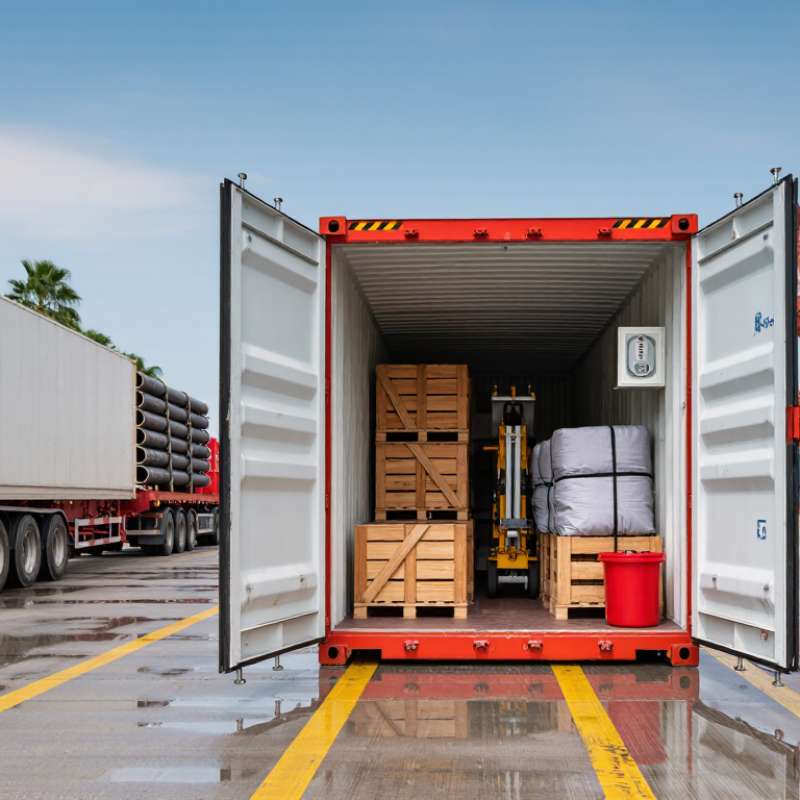
Choosing a container starts with the cargo, not the price. Measure each carton, pallet, machine, or loose item carefully. Record total weight, dimensions, center of gravity, and loading sequence. A standard dry container suits many boxed goods. Oversized equipment may need an open-top or flat-rack solution. Sensitive cargo may require controlled temperature and ventilation. Small details matter.
Consider the complete route. Port handling, inland roads, rail transfers, weather, and storage time can change your decision. A long ocean voyage may expose cargo to humidity and temperature swings. Use moisture barriers, desiccants, blocking, and bracing when appropriate. Check the container’s payload, internal dimensions, door opening, and verified inspection status. The route decides more than expected.
Shipping requirements also include timing, insurance, documentation, and handling limits. Confirm equipment availability with the carrier before booking. Do not assume every port accepts every container type. I have seen loading plans fail because a pallet turned sideways was never tested. That mistake costs time. A simple trial layout can reveal weak points before cargo reaches the terminal. Review lifting points, tie-down strength, and weight distribution with a qualified freight professional. Recheck measurements after packaging, because wrapping and crating can add several centimeters. Practical planning is imperfect, but careful records make corrections possible.
How to Choose the Right Shipping Container for Global Trade? - Define Your Cargo, Route, and Shipping Requirements
| Cargo Profile | Recommended Container | Typical Internal Dimensions | Typical Payload Capacity | Key Shipping Requirements | Route and Handling Considerations |
|---|---|---|---|---|---|
| General dry cargo | 20-foot dry container | Approx. 5.90 m L × 2.35 m W × 2.39 m H | About 28,000 kg, subject to container rating and local road limits | Suitable for cartons, pallets, machinery parts, and non-temperature-sensitive goods; distribute weight evenly. | Efficient for heavier cargo and shorter inland routes; verify axle-weight restrictions before trucking. |
| Large-volume general cargo | 40-foot dry container | Approx. 12.03 m L × 2.35 m W × 2.39 m H | About 26,000–28,000 kg, depending on tare weight and regulations | Best when cargo is volume-limited rather than weight-limited; confirm pallet arrangement and door clearance. | Often reduces cost per cubic metre on long ocean routes; terminal and road access must accommodate the longer unit. |
| Lightweight, bulky cargo | 40-foot high-cube dry container | Approx. 12.03 m L × 2.35 m W × 2.70 m H | About 26,000–28,000 kg, subject to equipment and route limits | Provides approximately 30 cm more internal height than a standard-height unit; check cargo height and stacking stability. | Useful for furniture, packaged consumer goods, and machinery with extra height; confirm height restrictions on inland legs. |
| Temperature-sensitive food or pharmaceuticals | Refrigerated container, commonly 20-foot or 40-foot | Internal dimensions vary; a 40-foot unit is commonly about 11.6 m L × 2.29 m W × 2.55 m H | Often approximately 27,000–29,000 kg, reduced by refrigeration equipment weight | Define the required temperature range, ventilation, humidity control, pre-cooling, data logging, and power continuity. | Requires powered connections at terminals and during inland transport; use ports and depots with reliable refrigerated handling. |
| Cargo requiring top or side loading | Open-top container | Similar floor area to a standard dry container; height depends on the removable cover and cargo arrangement | Commonly around 20,000–30,000 kg, depending on size and equipment rating | Suitable for tall machinery, timber, scrap, or heavy items loaded by crane; cargo must be secured against movement and weather. | Check crane availability, lashing points, over-height procedures, and whether the route accepts non-standard cargo profiles. |
| Oversized or exceptionally heavy machinery | Flat rack container | Length commonly about 6.06 m or 12.19 m; width is about 2.44 m, with collapsible or fixed end walls | Varies significantly; equipment ratings may support loads above 30,000 kg | Requires engineered blocking, bracing, lashing, centre-of-gravity information, and verified over-width or over-height measurements. | May incur special handling and out-of-gauge charges; confirm vessel acceptance, crane capacity, permits, and inland route geometry. |
| Liquid food, chemicals, or industrial liquids | Tank container | Typically built within standard container dimensions; common capacity is approximately 14,000–26,000 litres | Depends on tank design, liquid density, maximum gross mass, and applicable regulations | Verify product compatibility, pressure rating, filling limits, cleaning standards, safety data, and dangerous-goods classification. | Use approved equipment and trained handlers; dangerous liquids may require documentation, segregation, and regulatory approvals. |
| High-value or moisture-sensitive cargo | Dry container with enhanced moisture protection | Select 20-foot, 40-foot, or 40-foot high-cube dimensions based on volume | Usually approximately 26,000–28,000 kg, subject to container and road limits | Use desiccants, moisture barriers, shock indicators, tamper-evident seals, internal bracing, and suitable cargo insurance. | Prefer reliable schedules and limited transshipment; inspect the container for holes, odour, corrosion, and watertight doors. |
| Dangerous goods | Container selected according to the substance and applicable regulations | Use the required standard or specialised equipment after classification review | Determined by packaging, substance density, container rating, and legal gross-mass limits | Confirm UN number, proper shipping name, packing group, labels, marks, declaration, packaging, and segregation rules. | Carrier, port, vessel, and destination-country acceptance must be confirmed before booking; regulations can restrict routing. |
Related Posts
-
Why Choose an Empty Shipping Container for Your Business?
-

Best Ways to Source Empty Shipping Containers for Sale?
-
How to Choose the Right Large Shipping Container for Your Needs?
-
How to Use an 8ft Shipping Container for Storage and Transport?
-

2026 How to Use a Shipping Container for Sustainable Living?
-

7 Tips for Choosing a Cargo Shipping Container