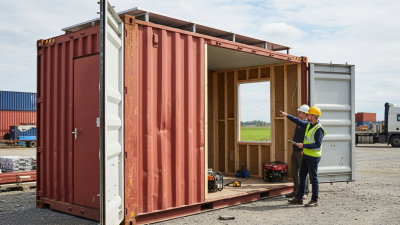
What Is a 40 ft Storage Container?

A 40 ft storage container is a large, steel-built unit designed to protect goods, equipment, and materials from changing weather. Standard models usually measure about 40 feet long and 8 feet wide. Their external height is commonly 8 feet 6 inches, although high-cube versions provide extra vertical space. Internal dimensions vary by manufacturer, door design, and insulation.

In practical site inspections, these containers are often used on construction sites, farms, warehouses, and business premises. They can hold tools, boxed inventory, machinery parts, or seasonal equipment. A typical unit has strong locking bars, wooden flooring, and double cargo doors at one end. Some models include side doors or ventilation openings. Those details can make daily loading much easier.

Size is not the only consideration.

Condition matters just as much. Before renting or buying, inspect the roof, corner posts, door seals, floor, and interior for rust or water marks. A container placed on uneven ground may twist slightly, making the doors difficult to close. Good airflow also deserves attention, especially when storing furniture, paper goods, or temperature-sensitive materials. A 40 ft storage container may look simple, but poor placement can create expensive problems.

This guide explains its structure, capacity, common applications, pricing factors, and maintenance needs. It also considers an important limitation: advertised capacity does not always match usable space. Shelving, pallets, door clearance, and safe weight distribution reduce available room. Careful planning remains essential.

What Is a 40 ft Storage Container?

Definition and Basic Purpose of a 40 ft Storage Container

What Is a 40 ft Storage Container?

Definition and Basic Purpose of a 40 ft Storage Container

A 40 ft storage container is a large, enclosed steel unit used to protect goods from weather and unauthorized access. It typically measures about 40 feet long, 8 feet wide, and 8 feet 6 inches high. High-cube versions provide extra height, usually reaching about 9 feet 6 inches.

Its original purpose was intermodal transport. The container could move between ships, trains, and trucks without unloading the cargo inside. Today, many people use the same structure for on-site storage. It can hold furniture, construction materials, seasonal equipment, archived files, or packaged inventory. The internal space is roughly 2,300 cubic feet, although usable capacity depends on wall thickness and door clearance.

The word “storage” sounds simple, but planning is not. A level, firm foundation helps prevent door problems and uneven loading. Steel walls provide strong protection, yet they can become very hot in direct sunlight. Ventilation may reduce condensation, especially when storing wood, textiles, or sensitive tools. Moisture control remains important.

A common mistake is filling every corner immediately. That makes inspection and retrieval difficult. Leave narrow walking space when possible. Check the roof, door seals, floor condition, and airflow before loading. A 40 ft container offers impressive capacity, but its size can become inconvenient on a crowded site.

Standard Dimensions, Capacity, and Weight Limits

What Is a 40 ft Storage Container?

Standard Dimensions, Capacity, and Weight Limits

A 40 ft storage container is usually 12.19 meters long, 2.44 meters wide, and 2.59 meters high externally. These figures follow ISO 668:2020 for common freight-container dimensions. Inside, usable space is approximately 12.03 meters long, 2.35 meters wide, and 2.39 meters high. Door openings are smaller than the internal width, so large equipment may require careful checking.

The internal volume is about 67.7 cubic meters, according to dimensions referenced in ISO 1496-1. In practical use, shelves, pallets, and protective gaps reduce that figure. A storage plan using uniform cartons may achieve around 55–60 cubic meters. Irregular furniture usually wastes more space. Measure twice.

Weight limits need closer attention. Many standard 40 ft units have a maximum gross weight near 30,480 kilograms. This figure includes the container, cargo, packaging, and any securing materials. With a tare weight between roughly 3,700 and 4,000 kilograms, the theoretical payload may reach about 26,500 kilograms. The exact limit appears on the container’s safety plate and can vary by construction.

The World Shipping Council and international container standards both emphasize verified gross mass for safe handling. That requirement matters even during short-distance movement. A forklift, crane, or trailer may have a lower operating limit. Capacity is not merely a volume question. Weak floors, uneven loading, and concentrated point loads can create problems before the stated payload is reached.

Materials, Construction Features, and Security Options

A 40-foot storage container is built for volume, durability, and repeated handling. Its frame commonly uses corrosion-resistant weathering steel, while corrugated wall panels add strength without excessive weight. The floor usually contains treated plywood supported by steel crossmembers. Interior dimensions vary, so measure before ordering shelves, machinery, or pallets.

Construction details affect daily performance. Double cargo doors use vertical locking rods and heavy hinges. Gaskets around the doors help reduce rain, dust, and drafts, but they are not completely airtight. Small ventilation openings limit condensation during temperature changes. I recommend checking welds, floor softness, door alignment, and roof dents during inspection. Used units can look sound outside while hiding corrosion underneath. That mistake is easy to make.

Security begins with the door design. A protected lock box can shield a padlock from cutting tools and direct impact. Internal locking bars may suit controlled-access sites, while tamper-evident seals help reveal unauthorized opening. Motion lighting, perimeter cameras, and a firm anchoring system add further protection. Still, no container is theft-proof. Security hardware can also slow legitimate access, especially during frequent loading. A practical setup balances protection, visibility, ventilation, and emergency access. Local fire, placement, and site-safety requirements should be checked before installation.

What Is a 40 ft Storage Container?

A 40 ft storage container is a reusable steel cargo box commonly used for storage, transport, and site applications. The chart compares typical external and internal dimensions of a standard dry 40 ft container.

Materials and Construction

Most dry storage containers use weather-resistant steel for the corner posts, frame, doors, and corrugated wall panels. The floor is typically made from marine-grade plywood supported by steel cross-members.

Security Options

Common security features include twin locking-bar doors, recessed padlock protection, lockboxes, tamper-resistant hinges, and heavy-duty external padlocks. The exact configuration can vary by container condition and intended use.

Dimension Note

Dimensions are typical metric specifications for a standard 40 ft dry container. Actual internal clearances may vary slightly because of manufacturing tolerances, flooring, door fittings, and repairs.

Common Uses and Suitable Storage Conditions

What Is a 40 ft Storage Container?

A 40 ft storage container is a steel unit measuring about 40 feet long and 8 feet wide. Its internal height is usually close to 8 feet, although high-cube versions offer extra headroom. This space suits furniture, tools, building materials, seasonal equipment, and business inventory. In practice, it can hold a small household’s contents, but packing access matters. A full container becomes difficult to reorganize.

Common Uses and Suitable Storage Conditions

These containers work well on construction sites, farms, warehouses, and private properties. They need firm, level ground, such as concrete or compacted gravel. Soft soil can cause uneven doors and frame stress. Keep the unit away from standing water and allow air to move around it. Moisture is the quiet problem. Condensation may damage cardboard, fabric, metal tools, and electronics, especially during temperature changes. Use raised pallets, moisture absorbers, and breathable covers. Avoid placing wet items inside. That mistake is easy to make.

Tips: Leave a narrow walking path near the doors. Label every box on two sides. Store heavy items low and near the center. Check the roof, door seals, and floor every few weeks. A small leak can become expensive. Ventilation helps, but it does not replace dry packaging. Inspect stored goods after storms and major temperature changes. I would also avoid assuming “weatherproof” means completely climate-controlled. If documents, artwork, or sensitive equipment are involved, a monitored indoor facility may be safer.

Buying, Transporting, Placing, and Maintaining a 40 ft Container

What Is a 40 ft Storage Container?

Buying a 40 ft container requires more than checking its price. ISO 668 sets the standard external length at 12.192 meters and width at 2.438 meters. Standard height is about 2.591 meters, while high-cube models reach approximately 2.896 meters. Internal dimensions vary. Measure the doorway, floor, and corner posts before ordering shelving or machinery. The tare weight also differs by construction and age. Request the inspection record, door-seal condition, floor treatment, and structural repair history. A cheap unit can become an expensive mistake.

Transport needs early planning. UNCTAD’s Review of Maritime Transport reports that over 80% of global merchandise trade moves by sea, showing why container logistics remain highly standardized. However, road delivery is less predictable. Confirm the loaded weight, chassis capacity, route width, turning space, and local access restrictions. A 40 ft unit may need a specialized trailer. Allow room for stabilizing equipment. Do not assume a normal driveway can carry it.

Placement affects long-term performance. Use a level, compacted base with evenly positioned supports, keeping the floor above standing water. Leave clearance around doors and inspect the roof after heavy rain. Good ventilation reduces condensation, but careless drilling weakens panels and invites rust. Check hinges, locks, welds, and seals every few months. Maintenance is often delayed. That is where small leaks become serious damage. Even experienced buyers sometimes underestimate delivery access and drainage.

What Is a 40 ft Storage Container? - Buying, Transporting, Placing, and Maintaining a 40 ft Container

Category Dimension or Consideration Typical Specification or Guidance Practical Notes
Overview Primary use Long-term storage, construction storage, agricultural storage, workshops, and modular projects A storage container is generally not designed to function as a permanent occupied building without modification and approval.
Buying Condition categories New or one-trip, cargo-worthy, wind-and-watertight, and used storage-grade The appropriate grade depends on whether the container will be shipped internationally or used only for stationary storage.
Dimensions External length Approximately 40 ft (12.19 m) Allow additional clearance for the delivery vehicle, lifting equipment, doors, and maneuvering.
Dimensions External width Approximately 8 ft (2.44 m) Check gates, driveways, property lines, overhead obstacles, and local access restrictions.
Dimensions External height Standard height: approximately 8 ft 6 in (2.59 m) A 40 ft high-cube container is approximately 9 ft 6 in (2.90 m) high and requires more overhead clearance.
Capacity Internal usable length Approximately 39 ft 5 in (12.03 m) Usable space is reduced by wall thickness, door hardware, floor condition, and stored items.
Capacity Internal width Approximately 7 ft 8 in (2.35 m) Measure large furniture, machinery, and pallets before purchase.
Capacity Internal height Standard height: approximately 7 ft 10 in (2.39 m) A high-cube model provides roughly 12 inches of additional internal height.
Capacity Internal volume Approximately 2,350–2,390 cubic ft (66.5–67.7 m³) for a standard-height unit Actual volume varies by manufacturer, interior lining, floor construction, and container design.
Access Door opening Approximately 7 ft 8 in wide by 7 ft 5 in high (2.34 m × 2.26 m) Door dimensions can vary slightly; verify the opening before moving bulky items.
Weight Tare weight Commonly about 8,000–9,000 lb (3,630–4,080 kg) The exact tare weight is marked on the container safety plate and may differ by construction and equipment.
Weight Maximum gross weight Often up to approximately 67,200 lb (30,480 kg), subject to the container rating Road regulations, vehicle limits, axle limits, and local permits may allow less than the container rating.
Weight Approximate maximum payload Roughly 58,000–59,000 lb (26,300–26,850 kg) before transport restrictions Always calculate payload as maximum gross weight minus the actual tare weight.
Transporting Delivery vehicle A suitable container trailer or specialized delivery truck is typically required Confirm vehicle access, unloading method, road width, turning radius, and ground conditions in advance.
Transporting Delivery clearance Plan for the container length plus extra space for positioning and unloading Inspect overhead wires, branches, signs, bridges, narrow entrances, and sloping approaches.
Placing Base preparation Use a firm, level, well-drained surface such as compacted gravel or concrete supports A stable base reduces door binding, uneven loading, floor stress, and standing-water problems.
Placing Support points Support the container at its structural corner areas rather than on the middle of the floor Keep the container clear of water runoff and avoid unstable soil or areas prone to flooding.
Placing Permits and regulations Requirements vary by location, zoning classification, property use, and installation method Check planning, building, property-line, stormwater, and fire-safety requirements before delivery.
Maintenance Roof and exterior inspection Inspect the roof, seams, corner posts, side panels, and underside at least twice a year Look for dents, corrosion, punctures, damaged seals, and areas where water can collect.
Maintenance Doors and locking hardware Keep hinges, rods, handles, gaskets, and locking bars clean and lubricated Do not force doors that bind; check whether the container has shifted or the base is uneven.
Maintenance Moisture control Use ventilation, moisture absorbers, pallets, and space between stored goods and walls Temperature changes can cause condensation, especially when contents are damp or airflow is limited.
Maintenance Corrosion protection Remove surface rust, clean affected areas, and apply a compatible rust-inhibiting coating Pay particular attention to roof edges, door frames, welds, corner fittings, and damaged paint.
Safety Storage precautions Distribute heavy items evenly and keep pathways, doors, and ventilation openings unobstructed Store hazardous, flammable, or regulated materials only when permitted and with appropriate safety controls.

Note: Dimensions, weights, capacities, and regulatory requirements can vary by container design, age, location, and transport jurisdiction. Confirm the specification plate and local requirements before purchase or delivery.