China Top Cold Storage Container Options for Your Business Needs?
In today's competitive market, choosing the right cold storage container can significantly impact your business’s efficiency. Cold storage containers are crucial for preserving perishable goods, minimizing spoilage, and maintaining product quality. These containers provide temperature-controlled environments designed to meet specific business needs.
With a variety of options available in China, businesses must assess their specific requirements carefully. Factors such as size, insulation quality, and temperature range play a vital role in selecting the ideal container. Moreover, some businesses may overlook the importance of proper maintenance to ensure these containers function optimally.
Evaluating suppliers based on their reliability, reputation, and customer service is essential. Not all cold storage containers are created equal, and not every supplier offers the same level of expertise. Therefore, careful consideration can help avoid common pitfalls in sourcing. Taking the time to understand these aspects can lead to better investments that enhance operational effectiveness and product safety.
Overview of Cold Storage Containers Available in China
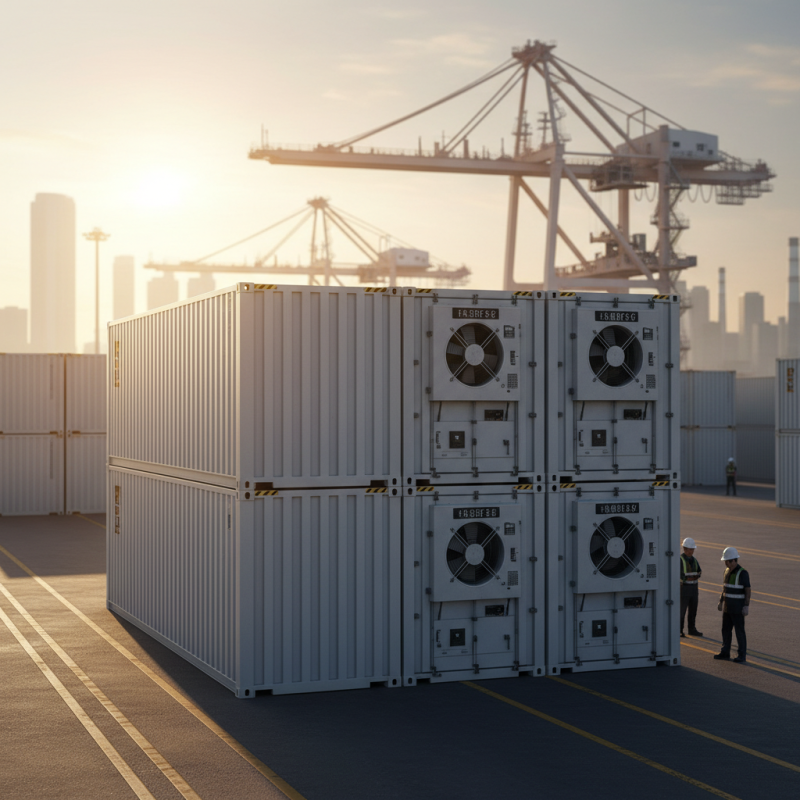
Cold storage containers play a crucial role in the logistics and food industries in China. These containers are designed to maintain specific temperatures, preserving perishables during transport and storage. According to a report by the Australian Institute of Refrigeration, Air Conditioning and Heating, the demand for cold chain logistics in China is expected to grow by 10% annually, highlighting the increasing reliance on these storage solutions.
In China, multiple types of cold storage containers are available. These include refrigerated containers, blast freezers, and portable cold storage units. The standard refrigerated container operates at temperatures between -20°C and 20°C, making it suitable for various products like pharmaceuticals and fresh foods. Meanwhile, blast freezers can rapidly lower temperatures to freeze items quickly, preventing ice crystal formation, which affects quality.
Despite their advantages, the initial investment costs and operational complexities can pose challenges for businesses. The cold storage sector in China is evolving. Increased competition and technological advancements are improving efficiency and reducing costs. However, not all containers meet the stringent safety standards required for sensitive products, leading to potential quality risks.
Businesses must carefully evaluate their options, weighing the benefits of advanced technology against real-world performance issues.
Key Features to Consider When Choosing Cold Storage Containers
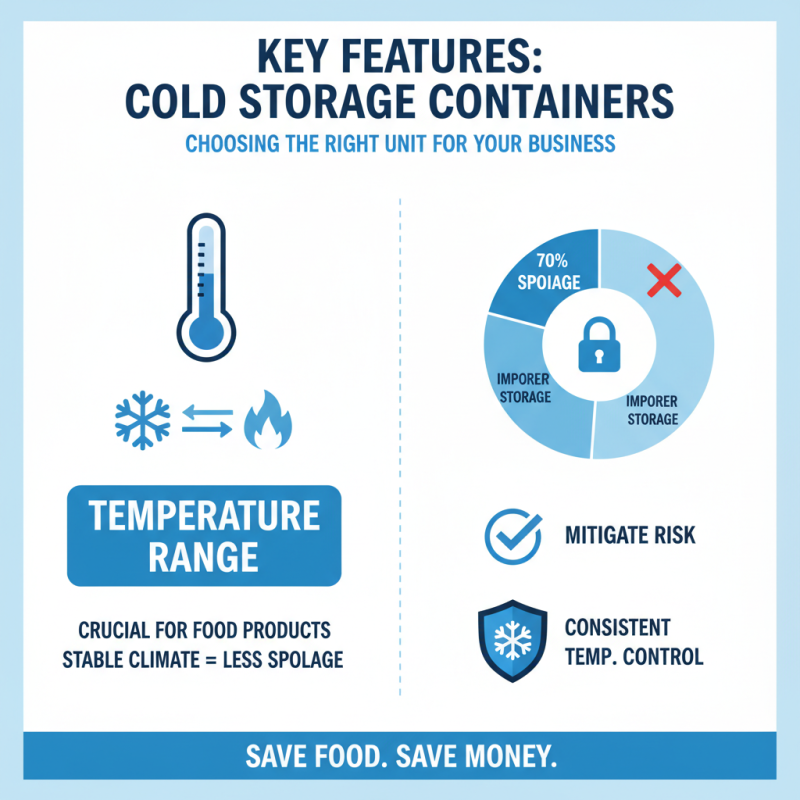
When selecting cold storage containers for your business, it’s crucial to evaluate several key features. Temperature range is vital. Most food products require specific temperatures. Reports indicate that 70% of food spoilage is due to improper storage conditions. Ensuring a container maintains a stable temperature within required limits can help mitigate this risk.
Another factor is insulation. Quality insulation materials can significantly affect energy efficiency. Effective insulation reduces energy costs by up to 30%, according to recent industry analyses. Consider the R-value of the container. This rating indicates its thermal resistance. Higher R-values are ideal for maintaining consistent temperatures.
Additionally, evaluate container materials. Many options exist, but choosing durable, corrosion-resistant materials is essential. Stainless steel is often recommended for its longevity and hygiene. Flexibility is another important feature. Some containers can adapt to different product types. This versatility supports inventory diversification, allowing businesses to meet changing market demands. Keep these details in mind. They can directly affect operational efficiency and product integrity.
Popular Manufacturers and Suppliers of Cold Storage Containers in China
In the cold storage industry, choosing the right container is crucial for maintaining product integrity. China has a range of manufacturers that specialize in cold storage containers. These containers come in various sizes and are made from materials that provide optimal insulation. They are used widely in industries such as pharmaceuticals, food, and chemicals. The market for cold storage solutions in China was valued at approximately $25 billion in 2022 and is expected to grow significantly in the coming years.
Among popular options, the emphasis is often on temperature control and energy efficiency. Many suppliers now focus on using advanced insulation technologies to reduce energy consumption. A recent report indicated that approximately 30% of energy savings could be achieved with modern cold storage solutions. However, some businesses may still rely on outdated systems that fail to meet new standards. This highlights the need for regular reassessment of storage practices.
While Chinese manufacturers maintain a competitive edge in global markets, there can be discrepancies in quality standards. Some containers may not have proper certifications, which raises concerns about reliability. Companies should conduct thorough reviews before making investments. Understanding the specific needs of a business is key to selecting the appropriate container. Using data-driven insights can help mitigate risks and enhance operational efficiency.
Pricing and Cost Factors for Cold Storage Solutions in China
Pricing for cold storage solutions in China varies widely. Factors like size and technology play crucial roles. You might find a basic unit for around 10,000 RMB. However, advanced models can soar above 100,000 RMB. Companies must assess their specific needs to find the right fit.
Operational costs also contribute to the overall price. Electricity use is significant. Some models are more energy-efficient than others. Maintenance expenses should not be overlooked. Regular checks can prevent costly breakdowns down the line.
Choosing the right container is not straightforward. Businesses often face challenges balancing quality and cost. It’s essential to weigh long-term benefits against short-term savings. Many factors demand consideration when investing in cold storage. Each decision can greatly impact efficiency and product safety.
China Top Cold Storage Container Options for Your Business Needs
| Container Type |
Temperature Range |
Capacity (Cubic Meters) |
Pricing (USD / Month) |
Features |
| Reefer Container |
-20°C to 20°C |
28 |
$800 |
Energy-efficient, flexible temperature settings |
| Insulated Container |
0°C to 25°C |
20 |
$500 |
Lightweight, cost-effective for moderate needs |
| Blast Freezer Container |
-40°C to -10°C |
30 |
$1200 |
Rapid cooling, ideal for perishables |
| Multi-Temperature Container |
-25°C to +25°C |
40 |
$1500 |
Versatile, supports multiple products at different temperatures |
| Portable Cold Storage |
-18°C |
10 |
$300 |
Easy to transport, suitable for temporary needs |
Applications and Industries Utilizing Cold Storage Containers in China
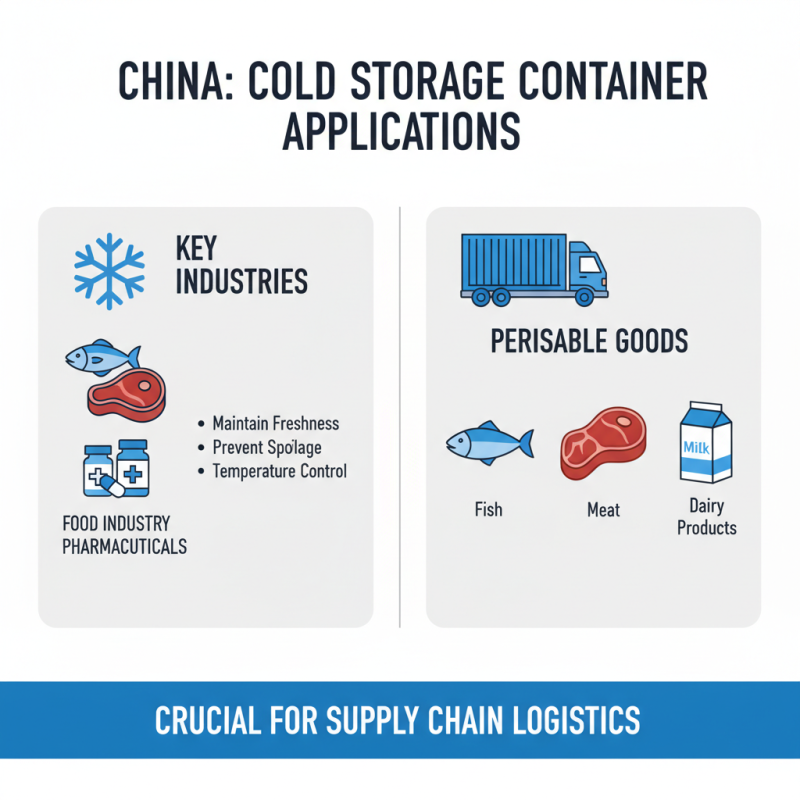
Cold storage containers are crucial across various industries in China. They play a key role in sectors like food and pharmaceuticals. The food industry, especially, benefits significantly from these containers. They help maintain the freshness of perishable items. For instance, fish, meat, and dairy products require specific temperature controls to prevent spoilage.
According to a report by the China Cold Chain Logistics Market, the sector is expected to grow at a rate of 12.3% annually over the next five years. This growth highlights the rising demand for effective cold storage solutions. In the pharmaceutical industry, proper temperature management is equally critical. Vaccines and other temperature-sensitive drugs need reliable storage to ensure efficacy.
Tips: Always monitor the temperature and humidity inside cold storage. Regular checks can prevent potential losses from spoilage. No solution is perfect, and inefficiencies may arise. It’s vital to reflect on your current systems and seek improvements consistently. Awareness of these aspects can enhance operational reliability in cold storage as you adapt to the dynamic needs of your industry.