How to Choose the Right Box Container for Your Needs?
Choosing the right box container is crucial for efficiency. John Miller, an expert in packaging solutions, once said, “The right container simplifies your workflow.” This highlights the importance of selecting a box container that fits specific needs.
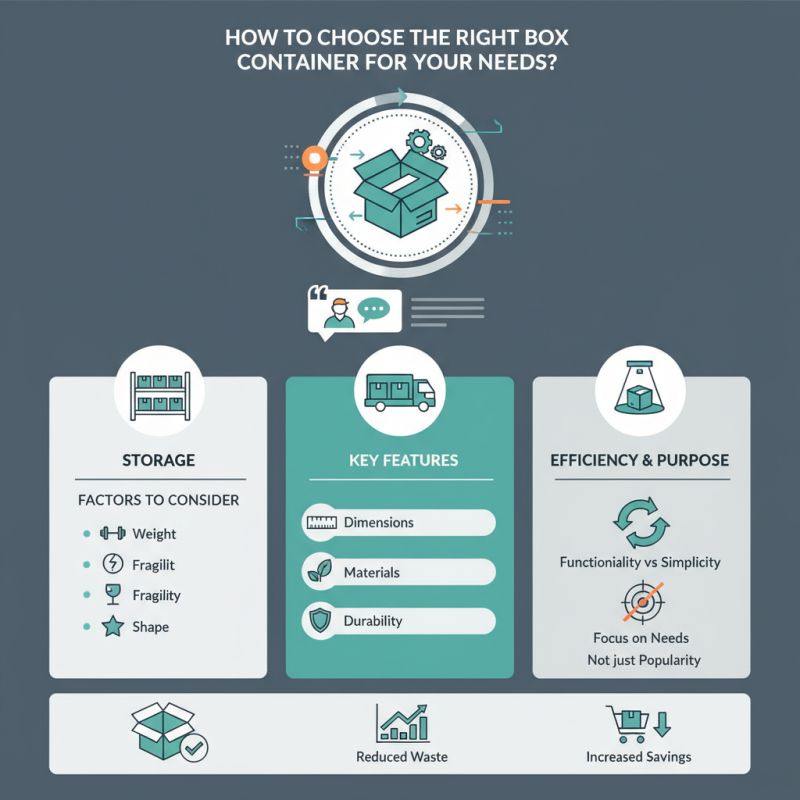
In today’s market, various box containers are available, each designed for unique purposes. Whether you need storage, transport, or display, understanding key features is vital. Dimensions, materials, and durability play critical roles in the decision-making process. A poorly chosen box container can lead to wasted space and increased costs, undermining your project’s effectiveness.
Consider what items you will store. Will they be heavy, fragile, or oddly shaped? These factors influence your selection. Simpler isn’t always better. Sometimes, a more complex design serves a specific purpose. However, overcomplicating choices can lead to confusion. Striking a balance between functionality and simplicity is essential. Focus on what you truly need, not just what's popular.
Understanding Different Types of Box Containers Available in the Market
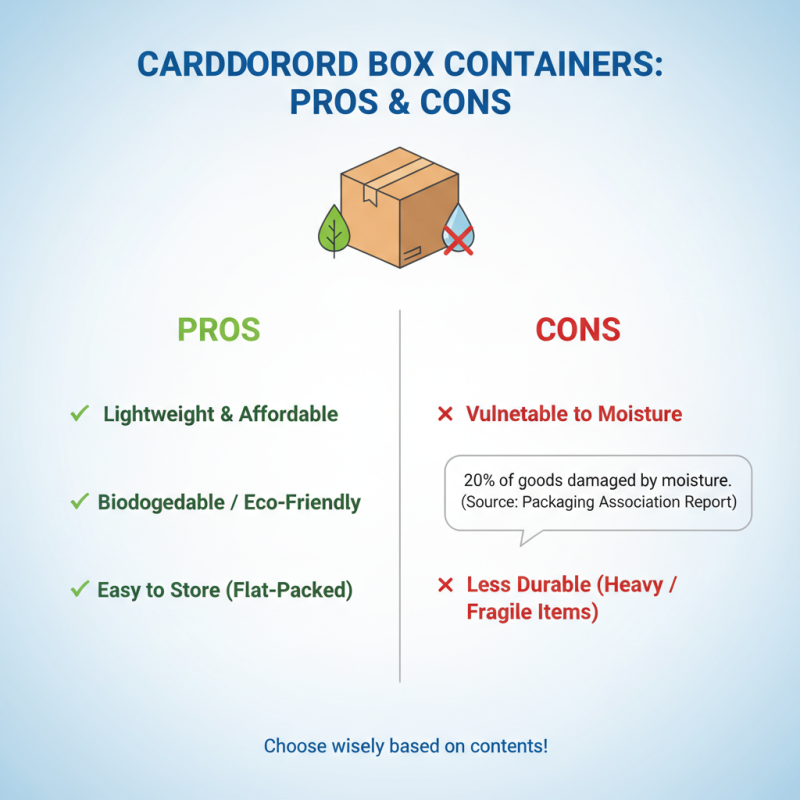
Choosing the right box container involves understanding the various options available in the market. There are a few primary types of box containers. They include cardboard boxes, plastic bins, and metal containers. Each type has distinct advantages and limitations. For example, cardboard boxes are economical and lightweight. However, they may not offer the best protection against moisture.
In 2021, the global packaging market report noted that the demand for eco-friendly packaging materials, including biodegradable boxes, has surged by 20% over the past five years. This shift reflects a growing consumer interest in sustainability. More brands are turning to recyclable materials. In contrast, plastic containers remain popular due to their durability and performance, making them suitable for heavy-duty applications. Yet, plastic waste continues to be a significant environmental concern that can’t be ignored.
Choosing the wrong box may lead to product damage or increased shipping costs. Consider the weight and fragility of your items. The right container can save resources and improve efficiency. Some might be tempted to skimp on packaging, but that often backfires. Investing in suitable container types leads to better customer satisfaction and fewer returns. The choice may seem straightforward, yet it requires reflection on specific needs and priorities.
Evaluating Your Specific Needs and Requirements for Container Use
Choosing the right box container requires careful evaluation of your specific needs. Determine the primary use of the container. Will it be for storage, transport, or organization? For instance, a sturdy box is essential for shipping fragile items. Lightweight options may work better for temporary storage.
Think about the dimensions that suit your items. Size matters greatly. A box too large can waste space, while a small one can lead to damage. Additionally, consider the material. Cardboard boxes are great for light items, but plastic provides durability and water resistance. Reflect on how often you will use them.
Do not overlook the importance of accessibility. A box that is difficult to open might frustrate you. Features like handles or lids can enhance usability. Assessing your routine can reveal whether you need stackable options or clear view containers. It’s about making your life easier, not complicating it. Take your time to explore.
How to Choose the Right Box Container for Your Needs?
| Container Type |
Material |
Capacity (Liters) |
Ideal Use Case |
Durability Rating |
| Plastic Storage Box |
Polypropylene |
50 |
General Storage |
Moderate |
| Cardboard Box |
Cardboard |
30 |
Shipping & Moving |
Low |
| Metal Container |
Steel |
100 |
Heavy-Duty Storage |
High |
| Wooden Crate |
Wood |
70 |
Agricultural Produce |
Moderate |
| Glass Container |
Glass |
10 |
Food Storage |
High |
Key Factors to Consider When Choosing a Box Container
Choosing the right box container requires careful consideration of several key factors. First, assess the material. Options include cardboard, plastic, and metal. Each material has unique strengths and weaknesses. According to industry reports, about 60% of businesses prefer durable containers to reduce transportation damage. Select a material that aligns with your product needs.
Size and shape are also critical. Oversized boxes waste space, leading to increased shipping costs. Conversely, containers that are too small may compromise product safety. A 2023 study indicated that optimizing box size can improve shipping efficiency by 25%. Custom sizes might be worth the investment.
Tips: Always measure your products before choosing a container. Consider the dimensions and weight. This prevents unpleasant surprises later. An often-overlooked factor is the environmental impact. Sustainable options are increasingly favored. Look for recyclable materials. This may resonate with eco-conscious consumers. Choosing an appropriate box container is not merely about form but also about function and responsibility.
Comparing Material Options: Cardboard, Plastic, Wood, and Metal
Choosing the right box container depends heavily on its material. Cardboard boxes are lightweight and often the most cost-effective option. They are biodegradable, making them a friendly choice for the environment. However, they may not be the best for moisture-rich items. In fact, a report from the Packaging Association states that nearly 20% of products in cardboard packaging suffer from damage due to moisture.
Plastic containers are becoming increasingly popular. They are durable and resistant to moisture. According to recent data, plastic containers can last up to 400 years in a landfill. While they are reusable, their environmental impact can be significant if not recycled properly. Yet, some industries still favor them for their lightweight and stackable nature.
Wooden boxes present a robust option. They are strong and can handle heavy loads. However, wooden containers often require more resources to produce. A study by the Forestry Research Institute shows that for every cubic meter of wood used, about 1,500 kg of carbon dioxide is sequestered. Metal containers, on the other hand, are incredibly durable but heavier. Their strength comes at a higher cost. Reflecting on these choices is essential, as one material's benefit might also be its drawback in different contexts.
Tips for Sizing and Organizing Box Containers Effectively
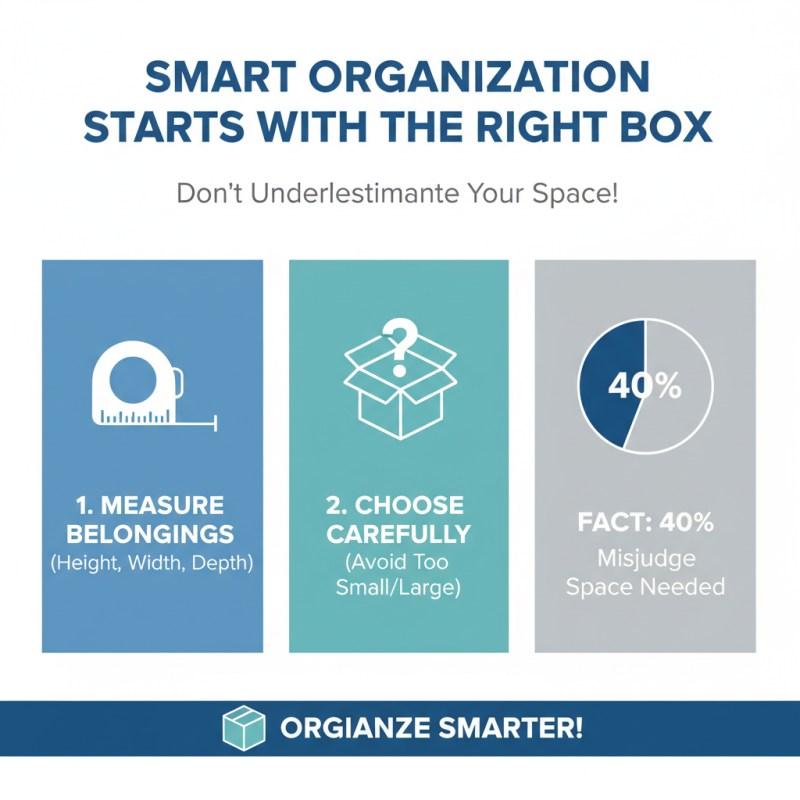
Choosing the right box container can significantly enhance your organization efforts. When selecting a box, size is essential. Research shows that about 40% of people underestimate the space they need when organizing items. Consider the dimensions of your belongings carefully. Use a measuring tape to gauge height, width, and depth. This simple step can prevent you from buying containers that are too small or too large.
Organizing with box containers means thinking about how often you access items. Frequent-use items should be in easily reachable boxes. Data indicates that up to 30% of storage space goes unused. To maximize space, opt for stackable containers. These can utilize vertical space effectively. Labeling is also crucial. Studies have found that labeled boxes can reduce retrieval time by 25%. This ensures you can find what you need without unnecessary digging.
Sometimes, you might find that your chosen containers don't fit the intended purpose. This is a common mistake. Reflect on whether your choices truly meet your needs. It’s okay to reassess your storage solutions. Every container doesn’t have to be perfect. Adjusting as you go can lead to better organization and usage in the long run.