How to Choose the Right 40ft Container for Your Shipping Needs?
When it comes to shipping, selecting the right 40ft container is crucial. This choice impacts your logistics, costs, and overall efficiency. A 40ft container is spacious, offering more than 2,300 cubic feet of storage. Such dimensions can accommodate a variety of goods, from furniture to machinery. However, not all shipments are the same. Different items have unique requirements that a standard container may not meet.
Consider your specific shipping needs. Are you transporting perishables that require temperature control? Or are you moving heavy machinery that needs extra reinforcement? Reflecting on these details will guide you in choosing the right 40ft container. The design of the container can influence its suitability for your goods. You might find the lack of insulation in a standard container challenging for delicate items.
It’s essential to look beyond basic dimensions. Think about weight restrictions and accessibility for loading and unloading. Be mindful that your choice can affect delivery times and costs. Inadequate planning can lead to delays. Ultimately, a thoughtful selection process will save you time and prevent unnecessary frustrations.
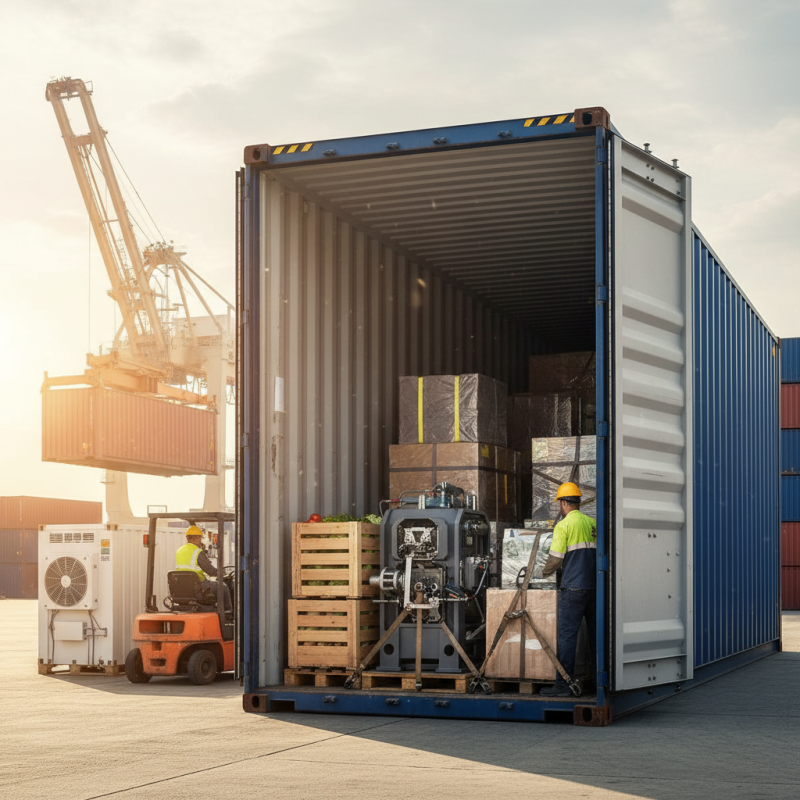
Understanding 40ft Container Types: Standard vs. High Cube
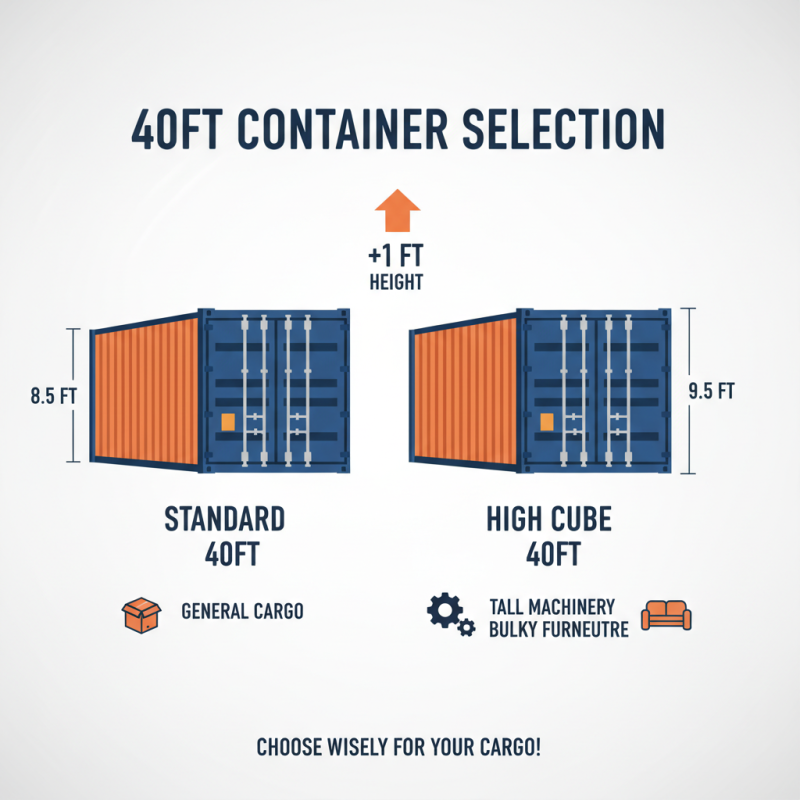
When selecting a 40ft container, understanding the differences between standard and high cube models is crucial. A standard container is 8.5 feet tall, while a high cube container reaches 9.5 feet. This extra height can make a significant difference for certain items. For example, if you're shipping large machinery or bulky furniture, a high cube container may be the better choice.
It's also essential to consider your cargo volume. Standard containers are suitable for most shipping needs. However, if you're dealing with lighter, voluminous goods, a high cube container can maximize space efficiency. Sometimes, we underestimate the height of our cargo. This oversight can lead to challenges during packing.
When deciding, think about the logistics involved. Will you need to unpack in a restrictive area? If so, a standard container might be easier to maneuver. Always visualize your loading process. This helps in avoiding last-minute surprises. Ultimately, the right choice balances your cargo's nature and the practicalities of transport.
Key Dimensions and Weight Capacities for 40ft Containers
When selecting a 40ft shipping container, understanding its dimensions and weight capacities is crucial. A standard 40ft container typically measures 40 feet long, 8 feet wide, and 8.5 feet high. This equates to about 2,390 cubic feet of storage space. It's important to note that this container can hold approximately 30,480 pounds (or around 13,800 kilograms) of cargo. This data comes from industry standards indicating optimal load capacities.
**Tip**: Always check weight restrictions. Overloading a container can lead to damage and costly fines.
Another essential aspect is understanding the container's tare weight, usually around 8,000 pounds (3,600 kilograms). This means the maximum cargo weight, when fully loaded, should not exceed the combined weight limits. Each container's handling capabilities vary by shipping line, so it's good practice to confirm details prior to shipping.
**Tip**: Consider your cargo type. Different materials may require specific stowage techniques to maximize space and ensure safety.
Measuring your cargo dimensions is vital. If your items are too large, they may not fit properly. Research shows that improper loading can increase losses by up to 20%. Thus, careful evaluation of your shipping materials helps avoid potential mishaps in transit.
40ft Container Weight Capacities and Dimensions
This bar chart represents the maximum payload capacities for various types of 40ft containers. It helps in understanding which container type suits specific shipping needs based on their weight capacities.
Assessing Container Condition: New vs. Used Containers
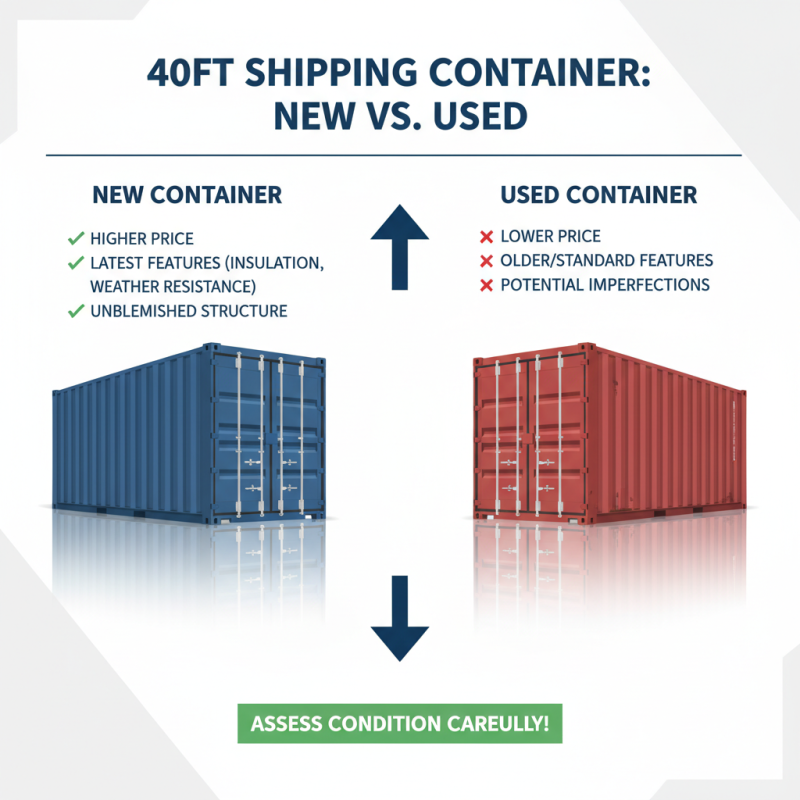
When considering a 40ft container, assessing the condition is crucial. New containers typically come with a higher price tag. They are often designed with the latest features. This includes better insulation and improved weather resistance. A new container also ensures that you start with an unblemished structure.
Used containers present a cost-saving option. They might show signs of wear, like minor dents or rust spots. However, if inspected carefully, they can still be very functional. Look for signs of damage that could affect usability. Ensure the door seals are intact and check for leaks.
**Tip:** Avoid containers with significant rust or damage. Structural integrity is paramount.
Moreover, think about your shipping needs. Will the container be stored or frequently moved? A used container might suffice for storage but could be less reliable for transport. Compare your options and weigh the potential risks against costs.
**Tip:** Consider the cargo type; some items require better insulation. A used container may not offer that. Always inspect before making a decision.
Selecting Proper Container Ventilation and Insulation Features
When choosing a 40ft container, consider the importance of ventilation and insulation. Proper ventilation helps prevent moisture buildup, which can lead to mold growth. It's essential for transporting perishable goods. Without it, items may spoil more quickly.
Insulation can protect sensitive cargo from temperature fluctuations. If you are shipping electronics or food, insulation is crucial. It prevents damage from heat or cold. Look for containers designed with quality insulation materials. This feature reduces the risk of temperature-related issues.
Tips: Always check the container’s vent locations. They should be strategically placed. Too few vents can trap humidity. Also, inspect the insulation for any damage. Compromised insulation will affect shipping conditions. Make sure your choice matches your cargo's requirements. It’s smart to reflect on the specifics of what you’re shipping. Mistakes can lead to costly losses. Consider your needs carefully.
Cost Factors and Shipping Considerations for 40ft Containers
When considering a 40ft container for shipping, cost factors play a crucial role. The purchase price varies widely based on condition and type. New containers cost significantly more than used ones. You might think a new one is better, but used options can be just as reliable. Don’t overlook repair costs if you choose a second-hand container. Sometimes, what seems like a good deal can turn into a costly mistake if unexpected repairs arise.
Shipping considerations also affect your choice. Availability can vary by location. Check local suppliers to find what’s in stock. Be mindful of delivery times too. In some cases, shipping rates fluctuate based on demand. You might find that a container is cheaper at one time and pricier at another. Think about your timeline. It’s important to align your shipping needs with the container's availability. Factors like weather and logistics can impact your schedule.
Careful planning is key to maximizing value. Inspect the container thoroughly before purchasing. A seemingly minor dent or rust issue can be a larger problem down the road. Reflect on your long-term needs too. Will this container serve you well in the future? Sometimes, decisions made in haste can lead to regret later. Evaluate your options carefully to ensure that the container aligns with both your immediate and future shipping requirements.