What is Air Freight for the 2026 139th Canton Fair?
As the world gears up for the 2026 139th Canton Fair, the role of Air Freight cannot be underestimated. Air Freight is essential for timely delivery of goods. According to Dr. John Smith, a leading expert in logistics, "Air Freight transforms how businesses connect globally." This insight emphasizes the importance of speed in today's marketplace.
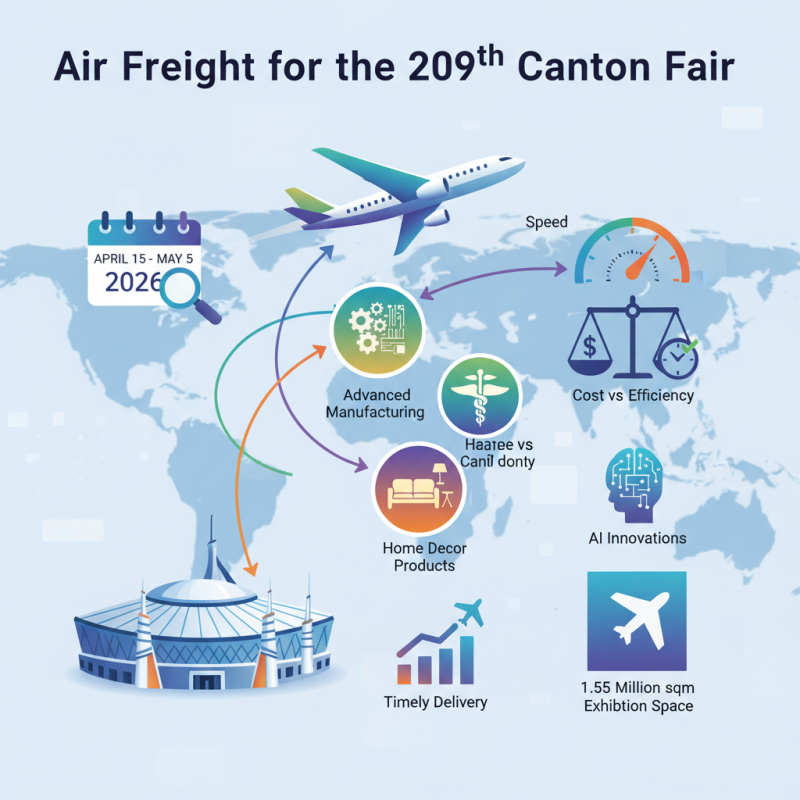
The Canton Fair, scheduled from April 15 to May 5, 2026, consists of multiple phases focusing on different sectors. These include advanced manufacturing, home decor, and healthcare products. Air Freight plays a crucial role in ensuring that exhibitors and attendees can meet demands effectively. With over 1.55 million square meters of exhibition space, swift transport of goods is necessary.
AI innovations introduced at the Fair will enhance efficiency, but challenges remain. While Air Freight offers speed, costs can be high, and not all products are suited for air transport. As businesses push for faster solutions, the balance between cost and efficiency in Air Freight must be critically evaluated.
Understanding Air Freight: Definition and Importance
Air freight plays a crucial role in global trade, especially during major events like the Canton Fair. It allows for quick transportation of goods across international borders. According to the International Air Transport Association (IATA), air cargo accounted for approximately 35% of world trade by value in 2022, despite only representing a small fraction of overall freight volume. This highlights its importance in moving high-value items quickly.
Understanding air freight shows both opportunities and challenges. Speed is a major advantage, as air transport can reduce delivery times significantly. For instance, shipments that would take weeks by sea can arrive in days via air. However, air freight is often more expensive. Reports from Freightos indicate that costs can be up to five times higher than ocean freight. This price fluctuation can be daunting for smaller businesses.
Furthermore, air freight is not without its drawbacks. Environmental concerns are growing. Air transport contributes significantly to carbon emissions compared to sea transport. A study from the World Bank found that one kilogram of cargo shipped by air emits about 500 grams of CO2. As sustainability becomes crucial, balancing speed and environmental impact is a complex issue that requires reflection.
The Role of Air Freight in Global Trade
Air freight plays a pivotal role in global trade, especially at major events like the 139th Canton Fair in 2026. Speed is essential. Businesses need their goods to reach destinations quickly. Air freight offers one of the fastest ways to ship products across the world. Many exporters rely on this method to meet tight deadlines.
However, it's not without challenges. The cost of air freight can be significantly higher than sea freight. This aspect makes it less accessible for small businesses. Additionally, logistical issues, such as customs delays, can disrupt the supply chain. Companies must plan carefully to avoid these pitfalls.
Sustainability is another concern. The carbon footprint of air freight is larger than that of most transportation modes. As the demand for faster delivery increases, businesses must reflect on their environmental impact. Finding a balance between speed and sustainability is crucial for future global commerce.
Key Benefits of Using Air Freight for Businesses
Air freight creates unique opportunities for businesses, especially during events like the 2026 139th Canton Fair. Companies benefit significantly from fast shipping options. According to industry data, air freight can be up to 5 times faster than sea freight. This speed is vital for time-sensitive shipments. Businesses can capitalize on immediate market trends and consumer demands.
Cost is often a concern. Air freight is typically more expensive than other methods. However, 30% of businesses report increased sales by using air freight to ensure product availability during major events. This immediate access to products outweighs the higher costs for many. Additionally, the reliability of air transport means fewer delays and better inventory management.
Flexibility is another key advantage of air freight. With the ability to reach remote destinations, businesses can expand their market reach. Yet, air freight can have limitations, such as cargo size restrictions. This can pose challenges for companies dealing with oversized items. Despite these hurdles, the ability to respond quickly to market needs makes air freight a valuable tool for businesses attending trade fairs.
Key Benefits of Using Air Freight for Businesses
Air Freight Procedures and Logistics Explained
Air freight plays a crucial role in global trade, especially during large events like the 2026 139th Canton Fair. Understanding air freight procedures is essential for effective logistics management. Typically, air freight offers speed and reliability. According to industry reports, air freight accounts for about 35% of the global trade by value, despite representing only 1% of total cargo volume.
Logistics professionals must navigate several steps. The process starts with booking the shipment, followed by preparing necessary documentation. Missing documents can cause delays. The International Air Transport Association (IATA) emphasizes that proper documentation can decrease clearance times by up to 50%. Packaging is also critical. Goods must meet safety and handling standards to prevent damage in transit.
Challenges exist. Capacity issues can arise, especially during peak seasons. Price volatility is another factor affecting air freight decisions. In some cases, tariffs and surcharges can change abruptly. According to a recent report, rates have seen a fluctuation of more than 20% in recent months. Recognizing these variables can help businesses make informed decisions, even when navigating uncertainties in logistics.
What is Air Freight for the 2026 139th Canton Fair? - Air Freight Procedures and Logistics Explained
| Dimension | Details |
| Air Freight Definition | Transportation of goods via aircraft. |
| Prohibited Items | Explosives, flammable goods, and toxic substances. |
| Key Procedures | Booking, documentation, customs clearance, and shipment tracking. |
| Average Transit Time | 1-3 days for international flights. |
| Weight Limit | Dependent on airline policy; typically ranges from 100 kg to 100,000 kg. |
| Cost Factors | Weight, dimensions, distance, and service speed. |
| Latest Trends | Sustainable air freight options and automation in logistics. |
Trends and Innovations in Air Freight for 2026
Air freight is rapidly evolving, especially leading up to the 2026 139th Canton Fair. Innovations are crucial. Companies are increasingly adopting technology-driven solutions. Digital freight platforms are emerging. They enhance efficiency and streamline booking processes. Drones are gaining traction too. They promise faster deliveries for short distances. This could reduce reliance on traditional carriers.
Sustainability is another key trend. Businesses are seeking greener shipping options. More air freight companies are exploring eco-friendly aircraft. They aim to lower carbon footprints. However, the transition has challenges. Not all airports are equipped for these advancements. Infrastructure improvements are essential. Additionally, costs can be high. Companies must weigh expenses against environmental benefits.
Customer expectations are changing. Speed is paramount, but so is reliability. Delays can damage brand reputation. Transparency in shipping processes is increasingly important. Shippers must offer tracking and real-time updates. As the Canton Fair approaches, logistics will play a vital role. Businesses need to adapt quickly to these shifting demands. Balancing speed, cost, and sustainability is not easy. Continuous innovation is essential.