
2026 Top Decorative Art Tiles Trends for Global Buyers

The 2026 Decorative Art Tiles market is moving beyond simple surface decoration. Global buyers now seek tiles that combine visual identity, durable performance, and responsible production. Grand View Research reports continued growth across the global ceramic tiles market, driven by residential renovation, hospitality projects, and premium interior design. Mordor Intelligence also identifies digital printing, textured finishes, and customization as important competitive directions. These findings suggest a clear shift: buyers want stronger stories behind every surface.

“Tile is no longer just a functional product; it is an essential design element,” says Bart Bettiga, former executive director of the National Tile Contractors Association. His observation reflects what designers see in real projects. Hand-painted patterns, botanical reliefs, terrazzo effects, and warm mineral colors are appearing on kitchen backsplashes, hotel reception walls, and compact bathroom floors. Some predictions remain uncertain. Consumer tastes change quickly, and sustainability claims require careful verification. Product samples, technical data sheets, slip ratings, water absorption figures, and installation guidance still matter.

This guide examines the 2026 trends shaping Decorative Art Tiles for global buyers. It considers material innovation, artisan influence, digital customization, color direction, and sourcing reliability. The goal is practical rather than fashionable. A beautiful tile must survive transport, installation, cleaning, and years of daily use. That is where many attractive concepts still need closer testing.
2026 Top Decorative Art Tiles Trends for Global Buyers

What Defines Decorative Art Tiles in 2026

What Defines Decorative Art Tiles in 2026

Decorative art tiles in 2026 combine surface character, practical performance, and cultural storytelling. Buyers now examine more than color and pattern. They want tiles that feel intentional under changing light. Grand View Research reports that the global ceramic tiles market exceeded USD 200 billion in 2023. This scale reflects strong demand for durable, design-led surfaces. Digital printing is also expanding creative options. MarketsandMarkets identifies digital printing as a key technology in the ceramic tiles industry.

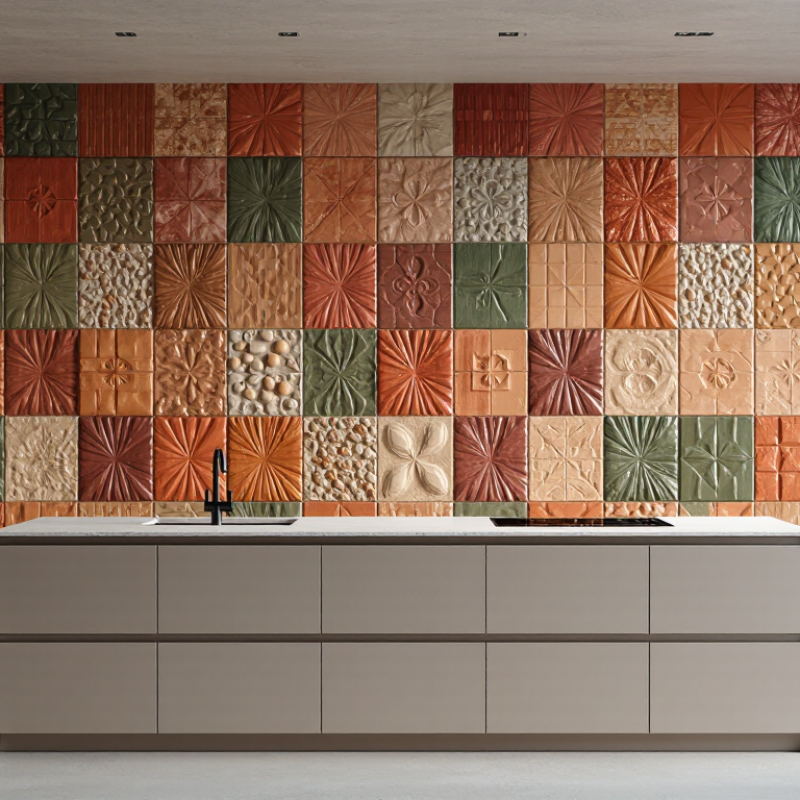
Texture matters. Soft relief, hand-drawn lines, irregular edges, and mineral-inspired finishes create visual depth. Large botanical motifs remain relevant, but smaller geometric panels offer easier installation. Warm clay, muted green, chalk white, and deep blue are gaining attention. Still, not every dramatic pattern works in a real room. Strong contrast can become tiring after several months.

Tips: Request physical samples before ordering. View them beside daylight, warm lighting, and existing flooring. Check slip ratings, water absorption, thickness, and batch consistency. Ask for installation guidance and replacement availability. Sustainability claims need evidence, not attractive wording. Look for environmental product declarations or clear recycled-content data.

For global buyers, customization is becoming a practical advantage. Digital production can support smaller artwork runs and regional motifs. However, custom designs may increase lead times and quality variation. Confirm the approved sample, carton protection, and tolerances in writing. Decorative art tiles should be beautiful, but they must survive cleaning, moisture, and daily contact. Performance still defines lasting value.

Key Design Trends Shaping Global Decorative Tile Demand

Global decorative tile demand is moving toward surfaces that feel tactile, personal, and regionally relevant. In sourcing projects, buyers often examine uneven edges, soft color variation, and hand-applied textures before choosing a collection. These details create warmth in kitchens, hospitality spaces, and retail interiors. Matte finishes are gaining attention because they reduce glare and reveal subtle texture under natural light. Some choices age badly. Excessive pattern can quickly overwhelm a small room.

Designers are also combining heritage references with contemporary geometry. Arched motifs, botanical lines, and simplified folk symbols now appear in calmer palettes, including clay, sage, sand, and deep blue. This approach helps decorative tiles travel across markets without losing character. Buyers increasingly request durable surfaces, consistent sizing, and clear technical data alongside visual appeal. Digital decoration can provide precise repeat patterns, but it may look too perfect. A small irregularity often feels more authentic. Responsible purchasing also means checking material composition, production standards, packaging, and installation guidance before approving samples.

Tips: Order physical samples and view them in morning and evening light. Test the tile beside grout, wood, and metal finishes. Ask suppliers for absorption, slip, shade variation, and cleaning information. Keep a record of batch numbers, because color differences may appear between production runs. For global projects, confirm dimensions in metric units and review local installation requirements. A beautiful tile can still fail when its maintenance needs are misunderstood.

2026 Top Decorative Art Tiles Trends for Global Buyers - Key Design Trends Shaping Global Decorative Tile Demand

Trend Representative Design Direction Common Formats Primary Applications 2026 Buyer Priority
Score / 10
Indicative Demand
Growth vs. 2025
Strongest Regional Interest
Handmade and Artisan Surfaces Subtle variation, uneven edges, soft gloss, and handcrafted visual character 50×50 mm, 65×132 mm, 75×150 mm, 100×100 mm Kitchen backsplashes, bathroom walls, hospitality feature walls 9.1 +11% North America, Western Europe, Australia
Warm Earth-Tone Palettes Terracotta, sand, clay, caramel, olive, and muted brown combinations 100×100 mm, 150×150 mm, 200×200 mm, brick formats Residential interiors, restaurants, boutique hotels 8.9 +9% Europe, North America, Middle East
Relief, Fluted, and 3D Texture Ribbed, scalloped, wave, botanical, and geometric raised surfaces 100×200 mm, 150×150 mm, 200×200 mm, custom panels Feature walls, reception areas, shower niches, retail displays 8.7 +13% North America, Europe, East Asia
Nature-Inspired Botanical Motifs Leaves, vines, flowers, birds, sea forms, and organic line drawings 100×100 mm, 150×150 mm, mural sets, coordinated borders Bathrooms, kitchens, wellness spaces, cafés, garden rooms 8.4 +10% Europe, Australia, North America
Geometric and Checkerboard Patterns Checkerboard, diamonds, arches, hexagons, stripes, and modular compositions 100×100 mm, 150×150 mm, 200×200 mm, hexagonal formats Entry floors, bathrooms, kitchens, hospitality interiors 8.2 +8% United Kingdom, North America, Southern Europe
Marble, Onyx, and Stone Visuals Veined marble, travertine, limestone, terrazzo, and mineral-inspired graphics 600×1200 mm, 600×600 mm, 300×600 mm, mosaic sheets Luxury bathrooms, hotel lobbies, living rooms, commercial walls 8.0 +7% Middle East, Europe, North America
Decorative Mosaics and Border Details Small-format mosaics, contrasting trims, framed inserts, and mixed layouts 25×25 mm, 50×50 mm, 25×300 mm strips, mesh-mounted sheets Splashbacks, niches, swimming pools, feature bands 7.8 +6% Mediterranean Europe, North America, Gulf markets
Outdoor and Indoor-Outdoor Continuity Coordinated interior and exterior palettes with slip-resistant porcelain options 600×600 mm, 600×1200 mm, 20 mm outdoor slabs, modular pavers Terraces, balconies, patios, pool surrounds, outdoor kitchens 7.6 +9% Australia, Southern Europe, North America
Low-Impact and Long-Life Materials Recycled-content ceramics, durable porcelain, responsible packaging, and repairable designs Standard wall tile, porcelain tile, modular mosaics Public projects, hospitality, residential renovations, retail spaces 7.5 +12% European Union, United Kingdom, Australia
Digital Customization and Bespoke Murals Made-to-order illustrations, local motifs, hospitality storytelling, and coordinated room sets 300×300 mm panels, 300×600 mm, mural systems, custom cut pieces Restaurants, hotels, retail interiors, premium residences 7.3 +14% North America, Europe, East Asia
Data note: Buyer priority scores and demand-growth figures are directional 2026 planning benchmarks synthesized from commonly reported design, renovation, hospitality, sustainability, and architectural-material purchasing patterns. They are not audited market-share statistics.

Innovative Materials, Finishes, and Production Techniques

2026 Top Decorative Art Tiles Trends for Global Buyers

Decorative art tiles are moving beyond flat ceramic surfaces. Buyers now favor layered materials, tactile finishes, and visibly crafted details. Recycled glass, mineral composites, terracotta, and porcelain are gaining attention for their varied textures. Some collections combine matte bodies with glossy reliefs, creating shadow changes under warm lighting. Metallic oxides can add copper, bronze, or aged silver effects without making every tile look identical. That irregularity feels authentic. However, color variation may become excessive if firing controls are weak.

Production techniques are also becoming more precise. Digital glazing can reproduce fine botanical lines, while water-jet cutting supports complex geometric layouts. Press molding creates deeper patterns with consistent dimensions. Hand-applied finishes remain valuable, but buyers should request clear tolerance ranges. A small difference may enrich a wall. It may also complicate installation. Experienced suppliers should provide sample panels, slip-resistance data, firing temperatures, and batch inspection records. These details help buyers compare appearance with long-term performance.

Tips: Request samples from different production batches. View them under daylight and artificial light. Check edge straightness, surface absorption, and cleaning resistance. Ask whether pigments or surface coatings meet the destination market’s safety requirements. Do not judge a tile from one photograph. Digital images often hide texture and shade differences. A sample can still mislead. Larger mock-ups reveal the real design rhythm. Allow extra material for cutting and future repairs.

How to read the chart: The index reflects the relative commercial momentum of major decorative tile directions among international buyers, using a 0–100 scale. Digital inkjet printing, tactile finishes, large-format porcelain, recycled content, and metallic or iridescent effects are gaining attention because they combine visual differentiation with scalable production and practical performance.

Regional Preferences and Emerging International Markets

In 2026, decorative art tiles will reflect regional habits more than global uniformity. Grand View Research estimates the global ceramic tile market reached about USD 227.9 billion in 2023, with continued growth through 2030. Decorative surfaces will benefit, but demand will not look identical everywhere.

European buyers often prefer soft mineral colors, imperfect edges, and small-format tiles for kitchens and heritage renovations. North American projects increasingly favor larger decorative panels, warmer neutrals, and low-maintenance finishes. Houzz renovation reports consistently show strong interest in personalized kitchens and bathrooms, supporting expressive backsplash designs. In the Middle East, geometric patterns, deep blue, sand, and metallic accents remain visually relevant. Southeast Asian buyers often combine botanical motifs with practical, easy-clean surfaces.

Emerging international markets deserve closer attention. India, Vietnam, Indonesia, Mexico, and Gulf countries are expanding residential and hospitality construction, according to regional construction outlooks from Oxford Economics. Local climate and installation skills still matter. Humid markets may reject delicate porous finishes, even when the design is attractive. That assumption is easy to miss. Product sizing, packaging strength, and replacement availability can influence purchasing decisions more than color trends.

The strongest opportunity may sit between craft and performance. Buyers increasingly want handmade character, but they also expect consistent dimensions and technical documentation. A 2025 market review by Mordor Intelligence identifies Asia-Pacific as the leading ceramic tile region, while growth is spreading through developing urban centers. Designers should test samples under real lighting. Small color differences can become major problems.

How Global Buyers Can Evaluate and Source Art Tiles

2026 Top Decorative Art Tiles Trends for Global Buyers

How Global Buyers Can Evaluate and Source Art Tiles

Decorative art tiles are moving toward tactile surfaces, handmade variation, and nature-based palettes. Grand View Research estimated the global ceramic tiles market at over USD 200 billion in 2023, with continued growth through 2030. This wider market signal supports demand for distinctive, higher-value surfaces. Yet, decorative appeal should not replace technical checks. Ask suppliers for water absorption, breaking strength, slip resistance, and stain-resistance results. ISO 10545 testing can help compare samples across different factories.

Tips: Request three samples from separate production batches. Check shade, thickness, edge straightness, and glaze consistency in daylight. Photograph each sample beside a ruler. A beautiful sample can still mislead. I have seen small color changes become obvious across a large wall. Confirm minimum order quantities, replacement rates, carton protection, and moisture-resistant packaging before negotiating price. Also review installation guidance, because uneven handmade edges require skilled labor and wider joints.

Sourcing decisions should include environmental evidence. The United Nations Environment Programme reported that buildings and construction represented about 37% of global energy-related emissions in 2022. Buyers can therefore request recycled-content percentages, manufacturing energy data, and responsible waste-handling records. Product declarations are useful, but they are not automatically proof of low impact. Check the assessment scope and date. Verify pigment and glaze compliance with the destination market’s chemical rules. One practical weakness remains: sustainability data is often incomplete. Record what is verified, what is estimated, and what still needs independent testing.